≡ Menu
Heat moulded Totobobo mask

[Video: how to shape the Totobobo mask]

The video shows how to mould the Totobobo Mask, using hot and cold water. The hot water helps to soften the body of the mask, while the cold water helps to “freeze” the mask after moulding it to the desired shape. This method can be done over and over again until satisfaction.

The heat treatment can be applied to any parts of the mask (e.g. the chin), not only the nose area. The possibilities are limitless. You may need to try moulding the mask several times to achieve the best fit.

Moulding feature further enhances protection and comfort for the user.

Better face fitment = better protection

PM2.5, a very fine airborne particle, is smaller than 2.5 microns which can be inhaled and travel deeply into our lungs, which may then enter our bloodstream. These particles causes micro inflammation and hardens our blood vessels. Recent studies have showed that the PM2.5 not only triggers diseases in our lungs and other respiratory organs, but also triggers cardiovascular diseases and strokes. Common surgical masks or even a poor fitting N95 mask won’t be of much help due to the cunningness of the PM2.5. Ensuring a secured face fit is the first fundamental step towards respiratory protection.

Totobobo Mask have three key features for obtaining an optimal face fit.

  1. Sizing : Totobobo Mask is the first and only mask that allows its user to cut to size. If you are not sure, you don’t have to risk cutting the real mask. Download this template to test the size using a paper dummy, before proceeding to cut the actual mask.
  2. Fine tuning with heat moulding : The heat moulding process makes it possible for the user to fine tune the fitment of the mask. Small gaps around the nose or under the chin? No worries! Just re-mould the mask and you’ll be able to eliminate, or minimize these gaps. You can re-do this step as many times as you like! Remember to not use boiling to re-mould the mask, otherwise you’ll risk destroying the mask. Use warm to hot water around 75C instead. Another point to note, to check the seal, you should sense negative pressure when inhaling.

Visual Seal Check (VSC) : Using the transparency of the Totobobo Mask, you can check if the mask is touching the areas below the chin, forming a good deal. If the seal is not optimal, you may fine tune the cutting and moulding of the mask, or simple adjusting the position and tension of the strap to get a better fit.

Wearing Comfort

“Comfortable mask improve compliance and protection”

The heat moulding adjustment allows the mask to be moulded to fit your face snuggly. A good fit is beneficial as it not only provides a good seal, but you’ll also feel more comfortable wearing. During inhalation, the process creates a “sucking” motion due to the negative pressure, forcing air to enter through the filters. Some users described it as “The mask is breathing with me.”

Got a question? Leave us a comment or send your questions to
totobobomask (at) gmail.com
{ 1 comment }

Why the Seal Matters

  • The mask’s effectiveness relies on two things: how well the filters clean the air, and how well the mask seals to your face so air flows only through the filters.
  • While filter quality is certified by lab reports, confirming a proper face seal is up to the user.
  • The Totobobo Mask is unique in offering a simple visual seal check using the “Water Mark” feature.

Step-by-Step Seal Check

  1. Apply a thin layer of water to your face with a cotton wool pad, focusing on the nose bridge and chin areas.
  2. Put on your Totobobo Mask as you normally would.
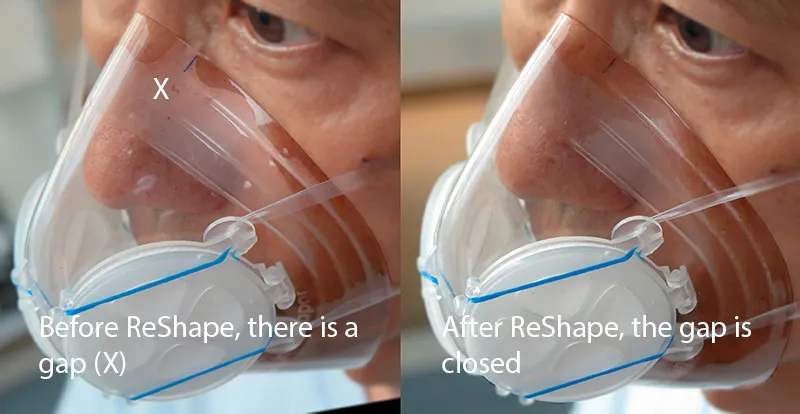
  3. Look closely at the frosted edge of the mask, which will turn transparent (form a “water mark”) wherever it contacts damp skin.
  4. Check that the transparent water mark forms a complete, unbroken loop around your face—over the nose, past the mouth, and under the chin.
    • If you see a continuous loop, your mask has a good seal and is ready for use.
    • If any frosted (opaque) sections break the loop, there may be gaps—adjustments are needed for a better seal.

Tips to Improve the Seal

Water mark shows poor and good seal before and after ReShape of Totobobo mask.Water mark shows poor and good seal before and after ReShape of Totobobo mask.

  • Shift the mask up or down to adjust its position on your face.
  • Adjust the elastic straps so they are snug but not overly tight (too tight can break the seal).
  • If needed, reshape the mask with hot (~70C) water to better match your facial contours.
    (Note: Thoroughly Mix 1 cup of boiling water with 3 cups of room temperature to get the required ~70C. Boiling water alone can damge the mask)
  • Downsize (trim) the mask if it’s too large for your face.

Final Reminder

Only a properly sealed mask provides the best protection. Always use the water mark method to confirm your seal before using your Totobobo Mask.

Q1: What is the Water Mark seal check method for the Totobobo Mask?
A: The Water Mark method visually verifies the mask’s seal by showing where the frosted mask edge turns transparent on contact with wet skin, forming a continuous loop around your face if sealed properly, ensuring optimal protection.

Q2: Why is a proper face seal important for respiratory masks?
A: A proper seal ensures that all inhaled air passes through the mask’s filters, blocking pollutants and allergens effectively. Gaps reduce mask efficiency and increase exposure risk.

Q3: How do I perform the Water Mark seal check on my Totobobo Mask?
A: First, apply a thin layer of water around your nose bridge and chin. Put on the mask, then check for a continuous transparent water mark around the mask edges—if intact, the seal is good. If not, adjust the mask position or straps.

Q4: What adjustments can improve a poor seal?
A: Shift the mask up or down for better fit, adjust strap tension to be firm but comfortable, reshape the mask using warm (70-80°C) water, or trim the mask edges if necessary.

Q5: How often should I use the Water Mark method?
A: Use the Water Mark seal check each time before wearing the mask to ensure continued protection and maximum filtration efficiency.

Q6: Can reshaping the mask damage it?
A: When reshaping, use water within the recommended 70-80°C range to avoid damage. Reshaping can be done multiple times to optimize fit without compromising mask integrity.


{ 1 comment }

How to customize the Totobobo Large Mask?

One of the most unique features of the Totobobo Mask is the “Cut to size” feature. The original mask fits most adults except users with smaller faces, for example, women and children.

TOTOBOBO mask can be cut to size

Totobobo Mask is the world’s first customizable respirator. Other products are only available in one size, which only fits a particular age range or facial structure. For many, that is little that can be done to solve this problem. Totobobo Mask, on the other hand, is capable of being trimmed to fit a wide range of faces for optimal comfort and sealing. The mask fits most adults but can also be modified to fit children as young as 5 years old. Totobobo Mask is the most versatile Respirator on the market. Customizing the mask’s size is simple, just follow these steps:

What you need :

A clean pair of sharp scissors

A pair of clean hands

Firstly, you’ll have to determine how small you want the mask to be trimmed to. You can do a quick estimate by covering the mask over the user’s face, or better yet, get a Totobobo Simulator. If you’re uncertain of the exact size, we suggest you to trim the mask down a ring at a time. The mask should ultimately form a snug fit onto the face, but not too tight to hinder the comfort of the user.

Remember to measure twice before you cut.

Then, carefully cut the mask starting from the bottom ring. Follow the markings carefully and slowly cut through the mask. Trim any excess bits and test the size if necessary. The excess material that has been cut out can be disposed and the mask is ready for use.


Step 1 - start the cut from the bottom of the mask
1 – start the cut from the bottom of the mask
Step 2 - insert the scissors into one size of the opening
2 – insert the scissors into one side of the opening

Step 4 - turning around to the other side

6 - almost done
4 – make a loop to the starting point
7 - see! you've got your small mask now
5 – see! you’ve got your small mask now

Related:

Test the cut with a Totobobo mask simulator

Buy Totobobo mask

{ 0 comments }

How to customize the Totobobo Small Mask?

Getting a face mask that will fit you perfectly isn’t an easy task. However, with Totobobo Mask, we’re here to make things easier for you!

Our masks are fully customizable, you can cut them down to whatever size you like. Of course, this isn’t an easy thing to do without any guidelines, therefore, we’ve posted this up to help our users have a better insight on how to customize their masks.

Before we proceed, it will be best if you have the Totobobo Mask simulator, it comes together with the product. If you happen to not have one with you, feel free to download it here : Totobobo Mask Simulator

Here is a step by step instruction with photos to guide you :

If the paper mask is too big, cut away the first line near to the chin-edge. Put it on the user's face again to test the size.
If the paper mask is too big, cut away the first line near to the chin-edge. Put it on the user’s face again to test the size.

Continue to cut the mask smaller, and test the size. Line by line until you get the mask size fitting your children.
Here showing the situation after the second line is cut away. Suppose this is the size fitting your children.
Now insert the paper simulator into the middle of the mask. Try to align the red circle with the filter cover.
Use the paper dummy as a guide, cut the mask with a pair of scissors. (The simple scissor shown in the photo is very good for cutting Totobobo mask)

The final result: a new Petit mask matching the size of your children. You may still need to ReShape the mask to fine tune the seal. The final result: a new Petite mask matching the size of your children. You may still need to ReShape the mask to fine-tune the seal.

A fitting mask for a happy child!

For further inquiries or assistance, please email us at totobobomask@gmail.com

{ 0 comments }

How to adjust the Totobobo earloop strap?

Wearing a face mask which is too tight or loose can be uncomfortable over a period of time, thankfully with our earloop straps, they are extremely elastic so our users can adjust the length of the straps freely! 

Here are a few steps that you can follow in order to achieve your desired length.

For users who have a bigger head or wearing the mask over any accessories, they may wish to have a longer strap length. 

To do so :

  1. Tie the straps directly across, from the bottom tab to the top tab.
  2. If it is too loose for you, you may loop the straps around the tabs, both bottom and top evenly. (FINE TUNING)

For users who have a smaller face, like children or women, they may wish to shorten the strap to have a tighter fitment for the mask.

To do so :

  1. Lay the strap over the filter lock rings, then loop them onto the tabs, both bottom and top.
  2. If it has reached a somewhat desired length for the user, you can start to adjust it in small amounts by looping the strap around the tabs again, both bottom and top. (FINE TUNING)
  3. If it is still too long for the user, he/she can further shorten it. Unhook the strap from the bottom and top tabs, then criss cross the strap and hook them back onto the tabs, exchanging positions.
  4. After criss crossing the strap, you can start to adjust the length again by looping them around the tabs again. (FINE TUNING)

These are suggestions by us, after going through several tests and sampling, we have decided this is the most suitable method for adjust the length of the straps. Of course, if you found a better way to adjust the straps, feel free to do so! Our straps are highly elastic, they are able to withstand the stress from all the stretching that it has to undergo.

Here is a short video, displaying the adjustment procedure that we have suggested :

{ 0 comments }

Merry Christmas!

We wish you a Merry Christmas!

We wish you a Merry Christmas!

{ 0 comments }

http://sepedaku.com/forum/showthread.php?t=24274

Indonesia cyclist testing the street pollution by checking the Totobobo filter after riding in the traffic

Indonesia cyclist testing the street pollution by checking the Totobobo filter after riding in the traffic

Translation by Google:
———————————–
In connection with the many discussions about air quality in Jakarta, moved their hearts to know how the hell the air quality in Jakarta this.
One day I bought a mask totobobo, and idly opened its website. In the website there totobobo blog written by two French people who travel around the world by bike, in every country where they singgahi mereke meberi lecture on air quality.

In the blog they will, they also compared the experience of cycling in the cities they pass by comparing how dirty totobobo filter masks they wore. Filter masks are compared after they were cycling for at least 6 hours in the cities they will be. In each city, they use a new mask filter, and so on. This reference links to his http://totobobo.com/blog/cyclist/ In this blog can be compared to a mask filter impurities used in India, Bangkok and China.

Inspired by the blog above, I conducted personally kecil2an test.
His tests conducted by:

-cycling and wear a mask for a month totobobo
-In the month is used as much as 4 times (3 times a day week, Saturday 1 times)
Cycling-Line: Tarogong – Jl Metro Pondok Indah – Jl. Margaguna – Jl Radio Dalam – Jalan Metro – Road sudirman – Jalan Thamrin – Monas – Thamrin Turn back again – so as to Tarogong again.
-Range biking: At 7 am left Jam – Best Jam Tarogong late until 9:30 in the morning. Every time Gowes time approximately 1 hour to 1.5 hours.

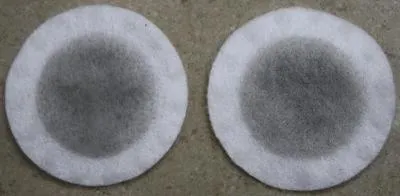
Well this is the result. Figure below shows the level of dirtiness of his two filter masks

dirty filters from Indonesia

dirty filters from Indonesia

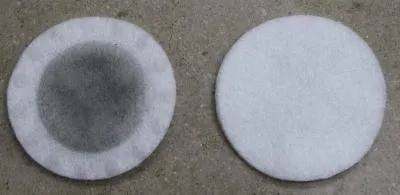
Figure below shows a comparison between the new filter and that was used

clean vs dirty filter

clean vs dirty filter

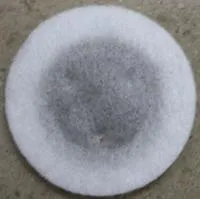
The next image shows the inner defilements tinggkat filter (the filter is located inside the mask)

the inside of the filter

the inside of the filter

That is a personal test that I do. I’m not going to make any conclusions from the results they will be because I am not an expert on air quality. I leave assessment to friends as well

Disclaimer:
-Test is done by not using standard scientific methods you know about the air testing, therefore the results can not be used as a standard for judging that the test subject.
-This test is a personal test, not a formal test.

Cheers

{ 1 comment }

How to say nay to hay fever?

When hay fever season strikes, sufferers feel the brunt of mother nature on their nose, eyes, throat, and lungs. The itchiness, sneezing, watery eyes, post-nasal drip, and runny nose are sometimes too much to bear. Going about daily activities can be difficult and tiring, or downright painful at times. Taking an anti-histamine or other medication can have little or no effect, and the side affects, like sluggishness or drowsiness, can be equally disruptive to carrying out one’s day. Due to these reasons, during the Spring and Summer season, people in Japan look for anti-pollen mask to prevent minor disorders like allergies and seasonal hay fever.

A good filtering mask helps to keep airborne irritants out of the breathing passages and is an effective measure to combat hay fever or other seasonal allergies. Allergens like pollen and dust enter the nasal passage and cause itchiness and swelling in the nose, throat, and eyes and trigger an increase in fluid and mucus production. While in many cases hay fever and seasonal allergies are minor, an estimated fifty million Americans alone suffer from these symptoms. Wearing an appropriate mask minimizes contact with the allergens that cause these physical nuisances. On the other hand choosing the appropriate mask can be a complicated endeavor.

Protective masks can be broadly divided into two types: one time use, disposable respirators and reusable respirators which can be used multiple times. A high quality multi-use protective mask provides the best fit, but often they are bulky and not easy to carry around. They are often more expensive than their disposable counterparts. Disposable respirator masks, on the other hand, are more compact, but sacrifice quality of filtration for convenience. They are easily distorted after one use, so a second is sometimes out of the question. Both types require professional fitting in order to ensure proper fit and filtration—which means you need a “fit-test” every time you wish to wear a protective mask. This severely reduces the convenience of either type of mask if you want guaranteed high-quality protection.

TOTOBOBO mask innovatively solves both the problem of quality and convenience, the best option for combating hay fever and seasonal allergies:

• Design: The mask’s special design and unique material allow the wearer to custom fit the mask to their face; it is held firmly onto the face by a pair of ultra-elastic and flexible straps. They are stronger and longer lasting than rubber. The material is an elastic polymer that is comfortable on the skin. One mask fits all, and can be trimmed with ease to fit any age, shape, or size. When not in use, it folds up to fit comfortably into a pocket. As for weight, it is a meager 20 grams.

• Seal: The TOTOBOBO mask forms a snug seal to the wearer’s face to ensure exclusive airflow through the filter. Unlike other masks, the TOTOBOBO mask combines high airflow with high filtration. The patented “body valve” design allows low resistance exhalation so that you uninhibitedly take in clean air with each breath.

• Simplicity: Whereas other protective masks need to be professionally checked for a proper seal that takes time, the TOTOBOBO mask is quick and easy to check for a safe seal to the face. Both children and adults can use the same mask, one mask fits all!

• Filter: The filters are European designed and of the finest quality, capable of keeping out particulates as small as .3 microns. Using static electricity to snag the particles as they enter the filter, the TOTOBOBO mask keeps out everything from motor vehicle and industrial exhaust, cigarette, woodfire, charcoal and incense smoke; biological components such as pollen and mold spores, dust mites and cockroach allergens; fine fibers such as asbestos; to common soil particles and dust.

• Health: The mask is anti-viral thanks to Biocote®, a silver-ion anti-microbial agent— an important consideration when the heat and humidity of the interior of the mask is taken into account. You can further ensure the cleanliness and safety of the TOTOBOBO mask. The mask is easy to clean with soap and water. Best of all, it is reusable. After each use, just replace the filter. The rest of the mask can be used many more times.

• Cost: As for economy, the TOTOBOBO can not be beat when it comes to bang for your buck. Compared to the leading competitors on the market, the TOTOBOBO is unparalleled when it comes to value.

Of all the respiratory mask available on the market, TOTOBOBO is the only one to combine these three factors: easy fit-check, easy customization, and easy storage.
When it comes to hay fever and seasonal allergies, the TOTOBOBO mask is a crucial addition to the list of non-medicinal treatments to prevent severe reaction to allergens. The high quality filter keeps 94% of particles as small as .3 micron out of your breathing passages and reduces the irritation they cause. Plant pollen and dander, dust and dirt, animal hair and dander, as well as smoke, soot, pollution, exhaust, mold and mildew are all filtered out of the air before you take a breath with the TOTOBOBO mask. Whether you live in the city or in the country, the TOTBOBO mask keeps airborne irritants that could potentially trigger an undesired allergic reaction out of your mouth and nose.

{ 0 comments }

Dear EarthTalk: I ride my bike to work along busy urban streets. Should I be worried about inhaling pollutants from vehicle emissions and other sources?

— J. Kaufman, San Francisco, CA

Aside from the obvious physical safety considerations (especially when talking on a cell phone!), biking on highly trafficked roads exposes riders to considerable amounts of fine particles, nitrogen dioxide and volatile organic compounds spewing out of tailpipes

Aside from the obvious physical safety considerations (especially when talking on a cell phone!), biking on highly trafficked roads exposes riders to considerable amounts of fine particles, nitrogen dioxide and volatile organic compounds spewing out of tailpipes © Getty Images

Aside from the obvious physical safety considerations (especially when talking on a cell phone!), biking on highly trafficked roads exposes riders to considerable amounts of fine particles, nitrogen dioxide and volatile organic compounds spewing out of tailpipes.

The short answer is, yes, probably. Cars, trucks and buses emit considerable amounts of airborne pollution as they make their ways along city streets and highways. The fine particles, nitrogen dioxide and volatile organic compounds (VOCs) spewing out of tailpipes have been linked to a wide range of human health problems, from headaches to respiratory illness to cancer. Though Australian researchers found that exposure to these pollutants is actually higher while riding inside a vehicle than while riding a bike, turning your handlebars in the direction of back roads might still be a good idea, for safety’s sake as well.
Western Washington University Geophysicist Bernie Housen, concerned about the air quality on his own bicycle commute along busy Bellingham roads, recently launched a study of the magnetism in local trees to gauge air quality along his route and elsewhere in his region. The magnetism in a tree’s leaves is created by tiny particles of iron oxides and other pollutants that drift through the air, emanating primarily from eroding vehicle brake pads and diesel exhaust. The particles are small enough to pass through our nasal passages and get lodged in our lungs. Housen and his colleagues found 10 times as much magnetism on urban roadside tree leaves as on their rural counterparts that contend with little traffic.

Housen has also altered his own bike route to campus to avoid the more polluted thoroughfares. “One underlying concern is that if you are riding your bike, you are being more physically active; you are breathing deeper and breathing more air in, and so if you are doing that in an area where there is a concentrated elevation of this material it might not be such a good thing,” he added.

Ironically, many cities that offer dedicated bike lanes often lay them out right next to busy bus lanes, unintentionally ensuring that bicyclists breathe in as much diesel exhaust as possible. “I ride along one of these high-traffic bus routes,” Housen says, “and … there was between two and five or six times more magnetic fine particulate matter along the bus route than [on less-busy streets].” Housen would like to expand his research so it could be used by urban planners to better design bike and pedestrian routes so as not to intermingle so much diesel transit and pedestrian/bicycle traffic.

Of course, there are other ways to track urban pollution levels. In the UK, for instance, researchers from the government-funded Engineering and Physical Sciences Research Council have created the Urban Pollution Monitoring Project, which builds and distributes GPS-enabled mobile pollution sensing systems that can be carried by hand or placed on a bike rack. The group is using data gleaned from the sensors to map where and when pollution levels are at their highest around London and other UK cities, and hopes to use its research to influence the way roads and urban areas are planned in the future as well.

Those who want or need to keep on riding through polluted areas should consider wearing an anti-pollution respiratory mask, many of which can filter out upwards of 95 percent of particulate pollution before it enters the human lung. Some leading manufacturers include Totobobo, G-Flow and Respro.

CONTACTS: Urban Pollution Monitoring Project; Totobobo; G-Flow; Respro.

EarthTalk is now a book! Details and order information at: www.emagazine.com/earthtalkbook.

GOT AN ENVIRONMENTAL QUESTION? Send it to: EARTHTALK, c/o E/The Environmental Magazine, P.O. Box 5098, Westport, CT 06881; submit your question at: www.emagazine.com/earthtalk.html; or e-mail us at: earthtalk@emagazine.com.

{ 0 comments }
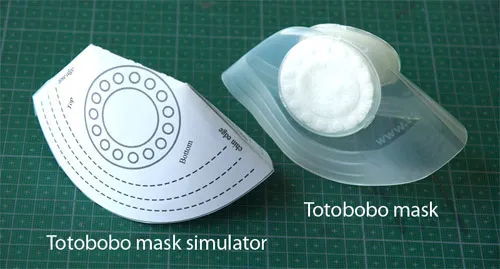
Side by side: Totobobo mask and simulator

If you’ve ever stared at a pack of masks and wondered, “Which mask size is for me?” you are not alone. Finding a mask that fits your face is a deeply personal challenge. Even if a specific model gets rave reviews and fits many people, it doesn’t guarantee it will fit your unique face shape. We often compare it to buying a pair of shoes—you can’t really tell if they’re “the one” until you actually put them on.

However, there is a massive difference between shoes and masks. You can walk into a store and try on ten different pairs of sneakers. But with masks, for obvious hygiene reasons, no one will let you try a new one until you have purchased it. Once you open that sealed pack, the product is yours to keep—for better or worse.

How can I determine whether the mask is my size without risking money on a product that might not seal properly?

Some companies have built a business model around this problem by selling “sampler packs.” These sets contain a few different models, allowing you to test them one by one. The idea is you pay for the sampler now to avoid buying the wrong box later. The catch? Whether you find a perfect match or not, you still have to pay for the privilege of trying.

At Totobobo, we decided to do things differently. We didn’t want you to have to pay just to find out if our mask might work for you. We believe that mask fitting your face shouldn’t be a gamble.

The Free Solution: The Totobobo Simulator

We created a better, fairer solution: the Totobobo Simulator.

This is a free, downloadable paper dummy of our actual mask. It’s a full-size template that’s easy to print and assemble. While it doesn’t contain a filter and won’t provide respiratory protection, it serves one crucial purpose: it allows you to test, for free, whether the physical dimensions of the Totobobo mask will fit your face.

Experiment Without the Risk: Finding Your Size

The simulator isn’t just a static model. It’s a tool for experimentation—perfect for answering “how do I make it fit my face?” before you even place an order.

One of the key features of the real Totobobo mask is that it can be trimmed to achieve a perfect, custom fit for smaller faces . The simulator lets you experience this process without any risk.

  • If it is too big, simply trim the paper simulator’s edges as you would cut the real mask.
  • If you cut it too small: No problem—just print another one and start over!

It’s the perfect way to practice and build confidence.

We know this is a common concern. We often hear: “How do I know it will fit better after cutting the mask? I’m worried about cutting too much and ruining it.”

With the Totobobo Simulator, that worry is a thing of the past. You can download it, print as many copies as you need, and experiment with different trims until you find the perfect size.

How to Use Your Simulator for the Perfect Fit

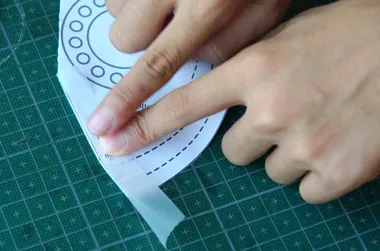
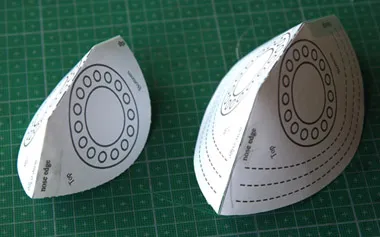
  1. Assemble: After three simple steps of cutting and folding, you have your very own simulator!
  2. Test: Hold it up to your face. This is the fun part. How does it feel? Is it too big?
  3. Trim: The position of the trim lines on the simulator is directly comparable to the real thing. You can follow them to achieve our standard sizes (M, S, XS) or any custom size in between .
1st step: cut it out
2nd step: fold it
2nd step: fold it
3rd step: join the edge

A Note on Reality vs. Simulation

It’s important to remember that the simulator is not the real mask. While it is an excellent tool for judging size and basic geometry, it has its limits. The most significant difference is in the nose bridge area. The paper simulator is flat, whereas the real Totobobo mask features a curved 3D profile that contours to the human face for a better, more comfortable seal.

Think of the simulator as the perfect first step. It ensures you have the right size before you ever open a sealed package. From there, you can order the real mask with total confidence, knowing that the only thing left is to experience the superior comfort and protection of the actual 3D design.

Ready to find your perfect fit? Download the Totobobo Mask Simulator today and take the guesswork out of your search.

Here is a few step by step illustration:

Testing the size
Testing the size
Simulators cut to different sizes for test
Simulators are cut to different sizes for testing

Related Simulator for Petit Totobobo: https://totobobo.com/blog/new-petite-mask-simulator-sizing-template/

Get the real mask:

Buy Totobobo mask

{ 3 comments }