≡ Menu
diwalli

Air Pollution Level Skyrocket in India during Diwali
Diwali, the festival of lights, is one of the biggest festivals in India. This festival which signifies the homecoming of Lord Rama, is an occasion of celebration and opulence. Traditionally, the festival is celebrated by decorating one’s home with lights and confetti and by bursting all kinds of firecrackers. Fun and games apart, fireworks lead to an unimaginable increase in the level of air pollutants.
Anyone who has been to India, and to Delhi in particular, during Diwali would definitely mention how polluted the air gets. According to a report in newspaper, The Hindu, in 2015, on Diwali the levels of harmful PM2.5 as measured by the Delhi Pollution Control Committee were 985 microgrammes per cubic metre at 9.20 pm on Diwali night in a certain location, as against the World Health Organisation’s safe standard of 60. This was twice as high as the PM2.5 levels in September 2015 in Singapore which forced school closures and the relocation of outdoor and sporting events.

A Toxic Concoction of Pollutants
A 2014 study by the Indian Environment Portal on the effects of firecrackers on air quality found that very high levels of PM10 and PM2.5 as well as gaseous pollutants like SO2 and NO2 are present in the air during Diwali. Firecrackers contain salts of aluminium, arsenic, sulphur, manganese, iron dust, etc., that are released in the atmosphere.
Inhalation of smoke from firecrackers is very harmful not just to asthmatics and the elderly but also to healthy human beings and can cause cough, fever and can also cause acute eosinophillic pneumonia. Fine particles such as PM2.5 are particularly harmful to humans, as they can enter the respiratory system, trigger asthma attacks, and even cause permanent damage. The chemicals found in the firecrackers are harmful if inhaled. Antimony sulphide, added to produce a glitter effect, is toxic and may be a carcinogen. You can find the complete list of pollutants and their effects in Table 6 of the report mentioned above.

Diwali firework contains a lot of air pollution

Totobobo Masks with F94 filters suitable for Diwali
A study regarding the specifications of different anti pollution masks available in the Indian market recommended Totobobo masks for protection from most pollutants during Diwali. The pollutants emitted during the festival were compared with the filtration capabilities of the anti-pollution mask, and it was found that the F94 filters were sufficient to filter most PM2.5 particles.
It is important to know that a mask needs to be used correctly if it is to provide any protection from pollutants. For example, if the seal between the mask and the nose and mouth is not secure, then the mask is useless. Totobobo masks have a seal check feature where a poor seal can be easily detected and the mask can even be moulded to improve the seal using hot water. Anti pollution masks should also be regularly replaced as their performance drops with us. Totobobo masks have a filter life check which makes it easy to know when the filter needs to be replaced.

These features make totobobo masks suitable for high-pollution conditions similar to those encountered during Diwali, the festival of lights.
If you are in India, you can buy Totobobo masks by calling Mr Roopak directly at 9871166668.
{ 1 comment }

Why Cyclists Need an Anti-Pollution Mask

Cycling may keep you fit, but it can also expose you to high levels of airborne pollutants, especially in congested cities like London, Manila, Bangkok, Los Angeles, Salt Lake City, Budapest, Mumbai, and Kaohsiung. Urban commuters inhale particles from vehicle emissions, dust, and construction debris — all of which can harm lung health over time.
A comfortable, well-fitted mask helps you breathe easier and stay healthier, whether you commute daily or ride for leisure.

Real Stories from London Cyclists

air pollution captured on the Totobobo filters ovewr a three months period.
Totobobo filter calendar, showing air pollution captured in 3 months of cycling and taking the Underground.

The image above shows the Totobobo filter calendar after three months of cycling and taking the Underground in London.
“Whatever is on the filters, glad that stuff is not in my lungs!”
— John, commuter cyclist, London
Like John and Claire, many London riders take proactive steps to limit their exposure — and it pays off. The visible darkening on the filters is proof of what they’re not breathing in.

The Cost of Air Pollution: Why Action Matters

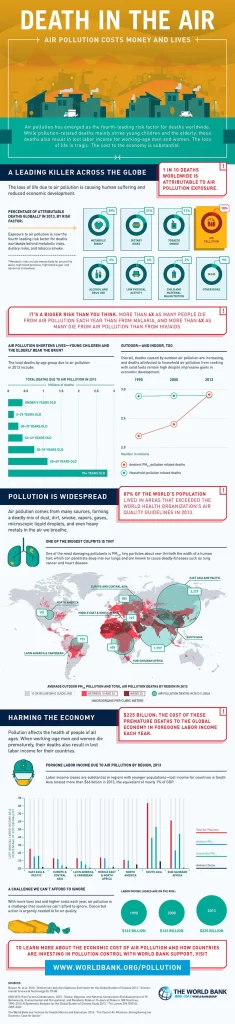
A joint study by the World Bank and the Institute for Health Metrics and Evaluation revealed a sobering reality: in 2013 alone, 5.5 million lives were lost due to diseases linked to outdoor and household air pollution. It’s now one of the top global threats to public health — the fourth leading risk factor for premature death worldwide.
Beyond its health toll, the cost of air pollution is immense. Global welfare losses from pollution-related deaths exceeded US$5 trillion in 2013. The question isn’t just environmental — it’s also personal and economic. So, how do we reduce the air pollution cost for humans?
Simple actions count:
Use cleaner transport like cycling, e-biking, or walking.
Wear effective filtration masks to protect your respiratory health.
Support low-emission initiatives in your community.
Choose reusable products to minimize waste and production emissions.

Cyclist’s Choice Mask for Poor Air Quality

Choosing the right pollution mask matters as much as the ride itself. The ideal mask balances:
High filter performance: captures fine particles (PM2.5 and smaller).
Comfort and fit: snug yet breathable for long commutes.
Reusable design: sustainable and cost-effective.
Lightweight style: so you can focus on your ride, not your gear.
Cyclists in air-polluted cities praise reusable masks such as Totobobo for their clear breathing performancecustomizable fit, and replaceable filters — all while reducing disposable waste.

Find a Comfortable Pollution Mask for Commuters

If you’re cycling through city streets or taking public transport daily, wearing a comfortable pollution mask for commuters isn’t just smart — it’s essential. It’s an investment in your health, your performance, and your planet.
So next time you ride past a line of idling cars, remember: what your mask traps stays out of your lungs. That’s a cost-saving every human deserves.

The infographic below is from the World Bank site. It shows the substantial burden of air pollution, strengthening the economic case for action. As you read the infographic, think about what you will do to reduce air pollution.

Air pollution costs money lives, World Bank and the Institute for Health Metrics and Evaluation (image credit: World Bank)
Air pollution costs money and lives, World Bank and the Institute for Health Metrics and Evaluation (image credit: World Bank)
{ 1 comment }

(Hungarian: Legjobb szmogmaszk kerékpározáshoz Budapesten)

Budapest is one of Europe’s most beautiful cities for cycling — from the grand Chain Bridge to the green paths along the Danube. Yet, the city’s winter haze and congested traffic often remind riders that beauty doesn’t always mean clean air.

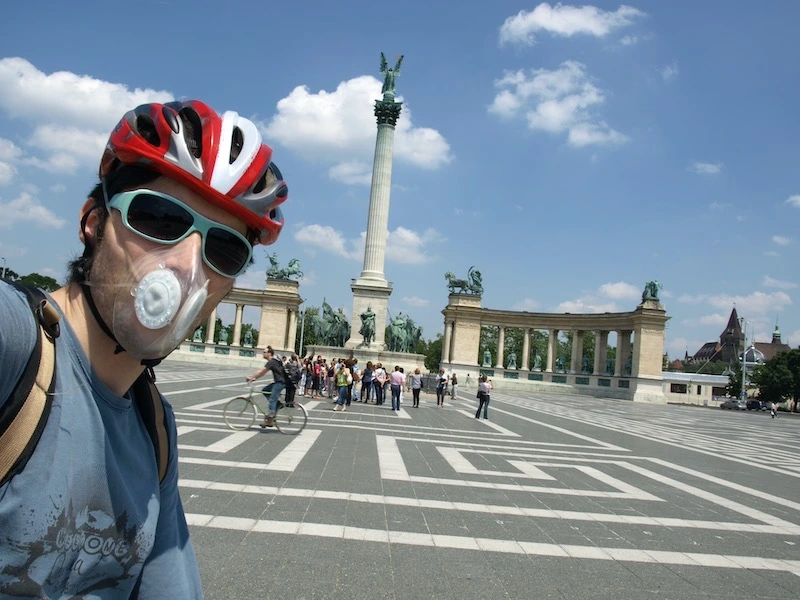
Cyclist wearing Totobobo Mask in front of the Heroe's Square in Budapest, Hungary

Choosing the best anti-pollution mask for cycling in Budapest isn’t about following a trend — it’s about keeping your lungs clear and your rides enjoyable, even on smoggy days.


Why Air Quality Still Matters for Cyclists
(Hungarian: Miért fontos még mindig a levegőminőség a kerékpárosoknak?)

Budapest’s geography can trap pollutants, especially during still, cold weather. According to Levegő Munkacsoport, PM2.5 levels periodically exceed European safety limits. Cyclists, who breathe more deeply during their rides, inhale these particles faster than pedestrians.

A reliable cycling mask for poor air quality helps filter out these microscopic intruders — protecting not just your lungs, but also your energy and endurance during longer commutes.


What Makes a Good Cycling Mask?
(Hungarian: Mi tesz jót egy kerékpáros maszknak?)

Budapest riders need a mask that adapts to shifting weather and uneven terrain. Here’s what to look for:

  • Effective filtration for particles smaller than PM2.5
  • Tight but comfortable seal, to prevent air leaks
  • High breathability for hill climbs and long rides
  • Reusable construction to support cleaner, sustainable habits

Dr. Anil Simhadri, an NHS consultant who’s used Totobobo since 2010, once shared: wearing a well-sealed mask made urban riding noticeably cleaner and calmer. His experience mirrors what many Budapest cyclists quietly discover after their first truly clean ride.


How to Reduce Air Pollution Exposure While Cycling
(Hungarian: Hogyan csökkentheted a levegőszennyezés hatását kerékpározás közben?)

You can do more than wear a mask. Daily habits make a big difference:

  • Choose riverside or park routes such as Margit-sziget and Népliget.
  • Avoid idling behind vehicles at lights — skip a lane to cleaner air.
  • Cycle during cooler, less congested hours.
  • Wash your face and replace filters regularly.

Combined, these steps and a comfortable pollution mask for commuters can cut exposure dramatically and make cycling through the city feel fresher.


Why Comfort Determines Long-Term Use
(Hungarian: A kényelem a tartós használat kulcsa])

A mask that fits poorly ends up forgotten. Lightweight, breathable designs make it easier to keep your mask on for the whole ride. Find one that feels part of your gear — not an inconvenience — and you’ll use it daily without hesitation.


The Small Habit That Shapes a Cleaner City
(Hungarian: Egy kis szokás, ami tisztább várost teremt])

Wearing a pollution mask for cycling in Budapest goes beyond self-care. It’s a sign of respect — for your own body and for the city you share. Every cyclist who switches from driving, or chooses sustainable commuting gear, plays a part in reducing Budapest’s air burden.

If you’ve found a mask or a route that works well, share your tips below. Personal stories help our cycling community grow and inspire newcomers to try cleaner rides.


Mask ModelKey FeaturesComfort & FitReusabilityBest For
TotoboboCustomizable, transparent fit; filters PM2.5 & PM0.3TotoSoft; no fogging for glassesReusable with replaceable filtersDaily commuters seeking clean breathing all year
Respro UltralightActivated charcoal + HEPA; durable neoprene shellSecure fit, slightly warm in summerWashable with replacement filtersHeavy-traffic bridge and downtown riders
Airinum Urban Air 2.0Multi-layer purification; elegant Scandinavian stylingSoft fabric; high comfortWashable shell, replaceable filtersStylish commuters needing breathable protection
Cambridge Mask ProMilitary-grade filtration; exhalation valveTight seal with strong airflowLong-lasting reusable designWinter riders needing airtight safety

Budapest’s weather and topography make these masks practical. Totobobo’s adjustable seal and see-through material simplify fitting — a feature many commuters value when the city’s winter air turns hazy.


FAQs
(Hungarian: Gyakran Ismételt Kérdések)

Do I need a pollution mask for cycling in Budapest?
(Hungarian: Szükségem van szmogmaszkra, ha Budapesten kerékpározom?)
Yes. Especially in traffic-heavy zones or winter, a mask helps minimize inhaled PM2.5.

Which pollution masks are best for urban cyclists?
(Hungarian: Melyik szmogmaszk a legjobb városi kerékpárosoknak?)
Reusable models like Totobobo, Respro, and Cambridge Mask balance comfort, fit, and effective filtering.

How do I know if a Totobobo mask fits me?
(Hungarian: Honnan tudhatom, hogy a Totobobo maszk illik rám?)
Its transparent design lets you visually check the seal. You can adjust straps easily for your face shape.

Are reusable masks effective against air pollution?
(Hungarian: A mosható, újrahasználható maszkok hatékonyak a szmog ellen?)
Yes, as long as they use certified filters and are cleaned regularly.

{ 2 comments }

“Comfort” is an intuitive and subjective feeling. Achieving it involve tackling a complex mix of hardware and human needs. It is clear that many users commented Totobobo mask is more comfortable compared to other masks they had tried before. What is the secret behind this special level of comfort?

First and the most important, the designer is the user himself.

Here is a list of features contributes to the unique comfort of Totobobo mask:

1) Extremely soft straps. Both our head strap for the classic mask or earloop strap of the earloop mask are substantially  softer and more elastic than other masks available in the market. Many users thought that the strap may break easily because they are so soft, but after many uses, they discovered this is one of the secret that makes Totobobo mask more comfortable than other reusable masks.

2) Light weight: tipping the scale at 20 grams, Totobobo mask is the lightest reusable mask in the world. A light mask requires less force to hold it on your face, and allows the use of softer straps.

3) Stand up design: keep the filter away from touching your nose or mouth. The filter won’t soak in your own saliva like a surgical mask or cloth mask will.

4) TotoSoft material: it is our propitiatory plastic material. Soft and comfortable to touch and it does not trigger any allergic reaction. It does not contain any latex, silicone or rubber.

5) Heat moulding: fine tune the shape so that it follows the user’s face closely. Therefore it requires minimum tension from the strap to fit the mask on user’s face. Less tension = more comfortable.

{ 0 comments }

Matthew’s SuperCool mask

Matthew's SuperCool mask

Matthew’s SuperCool mask. Matthew is using Totobobo F96 filter

I’m a great fan of your super-cool mask. For a while I used a 3M face mask when cycling but found that I got a staph infection in my nose owing to the high amount of moisture it created. Yet without any mask when cycling in London my asthma became very bad. The solution was your amazing Totobobo super-cool mask. There are a number of reviews online, even by competing mask manufacturers which dismiss its efficacy and say how unnatural it is to breathe in through your mouth and out through your nose. What utter nonsense! After only a few days it had become second nature for me to breathe in this fashion when cycling. Now I swear by the mask and am writing with the express wish that you use my endorsement publicly.

Sincerely,
Matthew (London, UK)
{ 1 comment }

Since its launch, the Totobobo Petite mask has become a favourite among our female customers. This smaller version of our classic mask is softer and specifically designed to fit the unique contours of ladies and children.

In many cases, the Petite fits women perfectly right out of the pack. For children, however, a bit of trimming is often needed to achieve that ideal custom fit. We’ve heard from some parents that customising the Totobobo Petite (TT-02) for smaller children—especially the little ones—can be tricky.

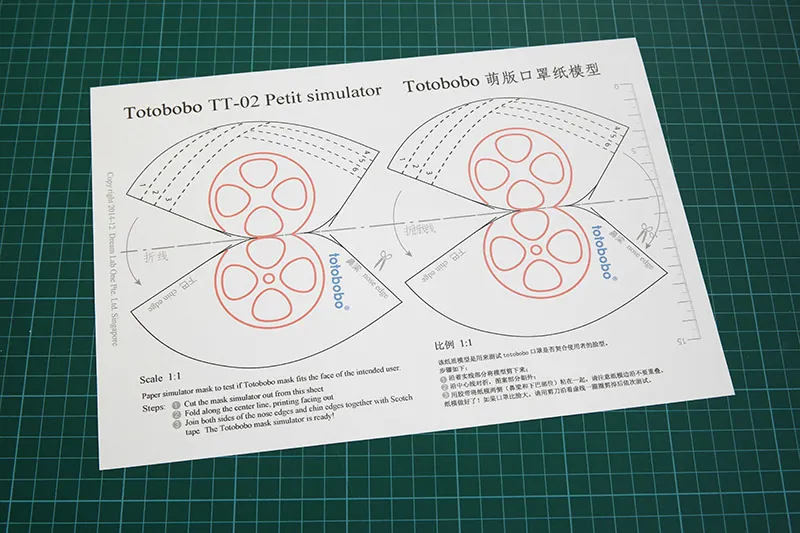
That’s why, after extensive research and customer feedback, we’ve redesigned the Petite Simulator. This downloadable tool allows you to create a full-size paper dummy of the mask. You can use it first to test the size, and then—once the fit is perfect—it serves as a precise template for safely customising the actual Petite mask.

Below is a simple, step-by-step photo guide showing how to assemble and trim the paper simulator, and then use your perfectly sized result as a template to modify the real mask.

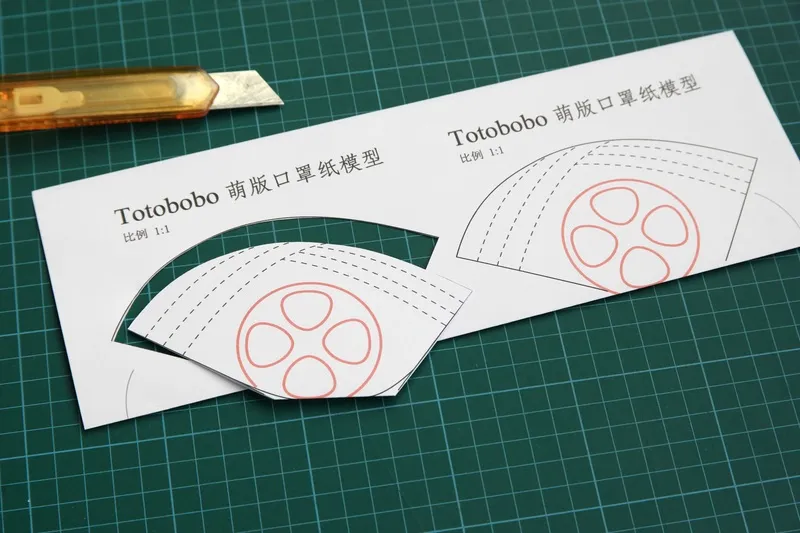
Download the file and print on A4 paper. Use the scale on top of the page to double check the scale is correct.
Print the simulator file on A4 paper, fold along the "fold line".
Print the simulator file on A4 paper, fold along the “fold line”.
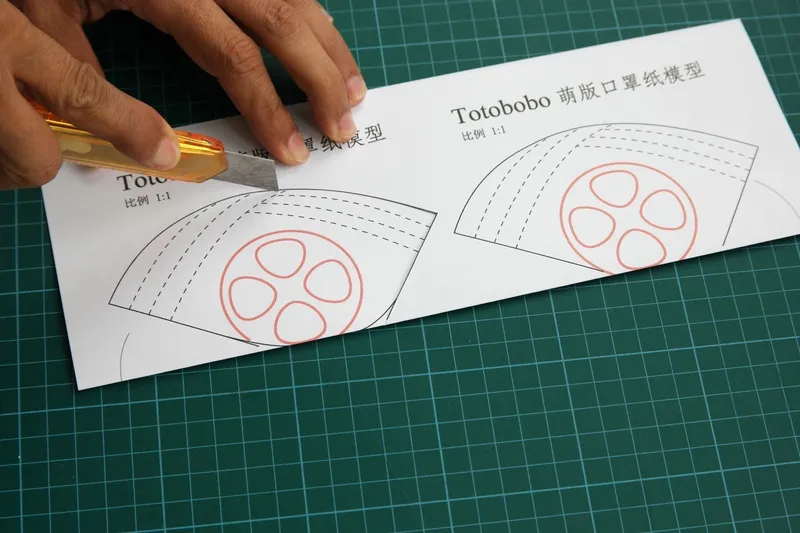
You can make two Petit simulators. Follow the outline and cut out the mask.
You can make two Petite simulators from the print. Follow the outline and cut out the mask.
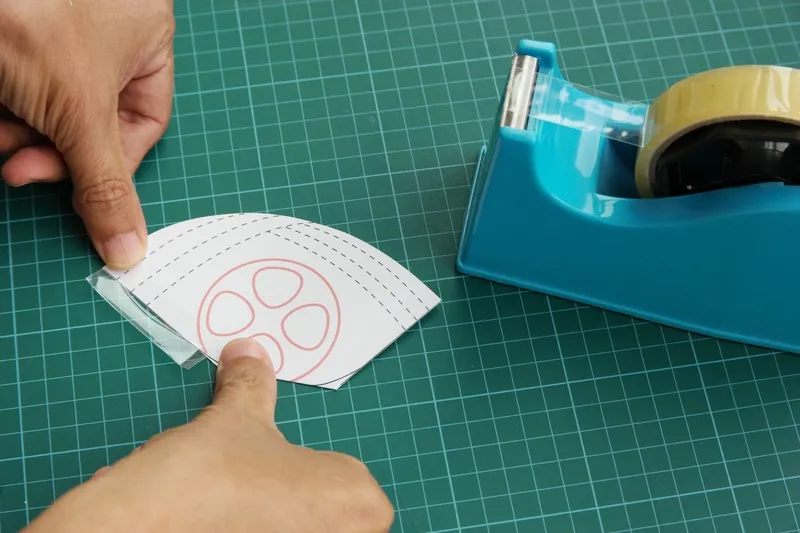
Use scotch tape to join the top (nose edge) and the bottom (chin edge).
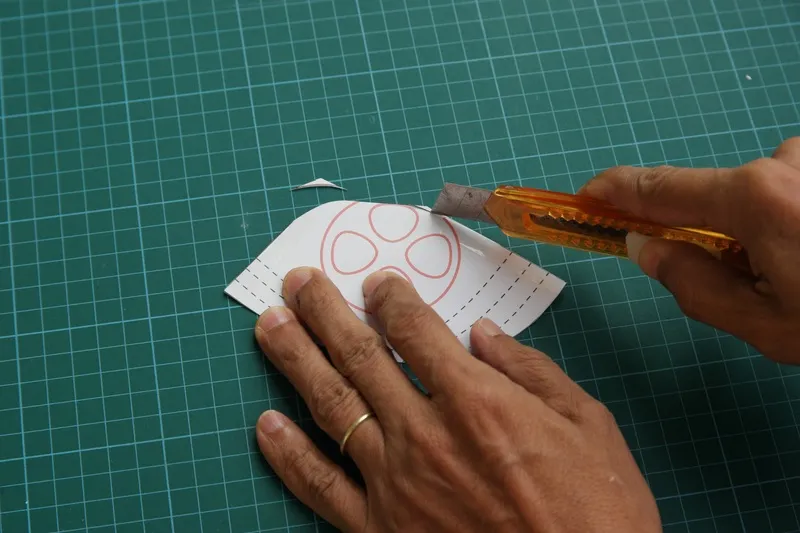
cut away the small corners.
you have now a full size paper simulator of the Petit mask. Open up the paper mask and try it on your children's face.
you have now a full size paper simulator of the Petite mask. Open up the paper mask and try it on your children’s face!
If the paper mask is too big, cut away the first line near to the chin-edge. Put it on the user's face again to test the size.
If the paper mask is too big, cut away the first line near to the chin-edge. Put it on the user’s face again to test the size.
Continue to cut the mask smaller, and test the size. Line by line until you get the mask size fitting your children.
Here showing the situation after the second line is cut away. Suppose this is the size fitting your children.
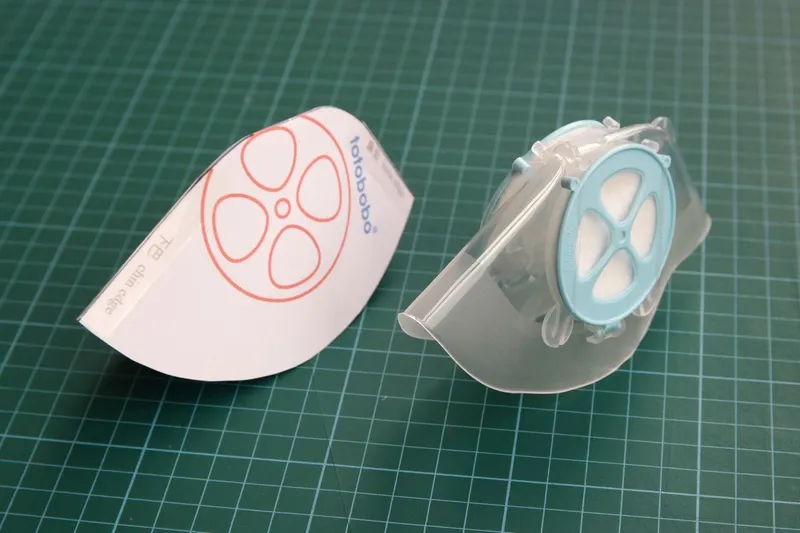
Now insert the paper simulator into the middle of the mask. Try to align the red circle with the filter cover.
Use the paper dummy as a guide, cut the mask with a pair of scissors. (The simple scissor shown in the photo is very good for cutting Totobobo mask)
The final result: a new Petit mask matching the size of your children. You may still need to ReShape the mask to fine tune the seal.
The final result: a new Petite mask matching the size of your children. You may still need to reshape the mask to fine-tune the seal.

 Related: Simlator for Large Totobobo: https://totobobo.com/blog/totobobo-simulator/


{ 0 comments }

The protection of a respiratory mask depends on two factors:
1. How good is the air filter and
2. How well the mask is able to seal your face, such that the air you breathe in must go through the filters.

The filters can be tested by reputable laboratory where certified reports are produced. We sent filters to Nelson Labs in USA and the results are published.
However, it is not at all easy for individual user to determine if the mask is really fitting the face completely without any gaps. Totobobo is the only mask in the market provides a simple method, or the “Water Mark check”, to let users ensure the face seal.

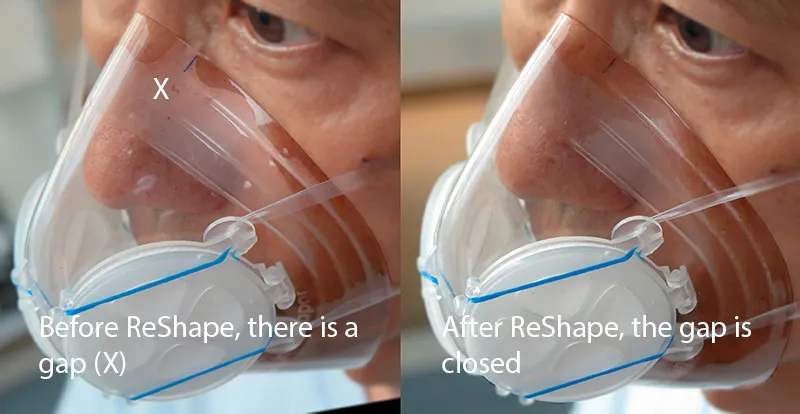
Water mark shows poor and good seal before and after ReShape of Totobobo mask.

Water mark shows poor and good seal before and after ReShape of Totobobo mask.

The frost edge of the mask changes to transparent when it touches wet skin. This is called the “water mark”. Followings show a step by step approach to check the seal with the water mark:
– Apply a thin layer of water on the user’s face with cotton wool, especially around the nose bridge and chin area.
– Don the mask and carefully examine the water mark.
– Check if the water mark form a complete, continuous loop encircling the nose, mouth and under the chin, that indicates the mask is making a good seal around your face. The mask is now ready for use.
– If there are patch(s) of frost area breaking up the water-mark-loop, that indicates where the seal breaks and you may need to adjust the mask to improve the seal. There are several things you can do, such as:
1) Adjust the position of the mask. (shift it up and down to find the optimal position)
2) Adjust the tension of the elastic straps (it should be firm, but not too tight)
3) ReShape the mask (use 70°C water or hair dryer, but don’t overheat!)
4) Cut the mask smaller (only when it is really necessary!)

Your mask is ready to give you the best protection when you have a good seal. Do use the water mark method to double check the seal.

{ 0 comments }

Recent reviews of Totobobo mask

Due to the haze issue recently, Totobobo mask received refreshed interests from the Singapore community. Here is a quick list link to some of the reviews:

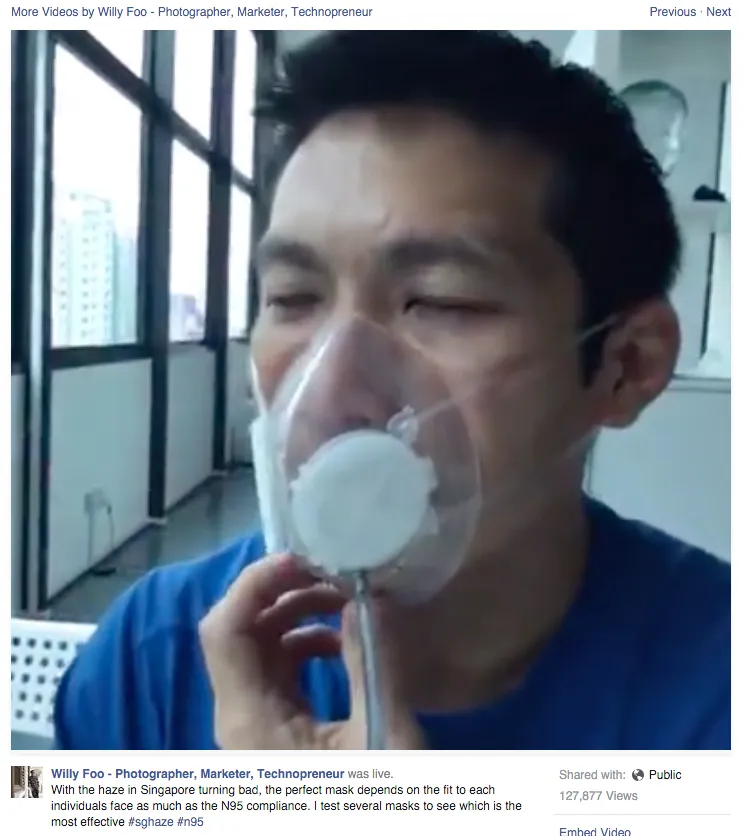
2015-09-25 Video review of several masks which includes Totobobo, Air+, 3M, Respro and surgical masks, by Willy Foo, Photographer, Marketer, Technopreneur

https://web.facebook.com/willyfoo/videos/10153834644404245/

Willy Foo Photographer, Technopreneur reviewing Totobobo mask

Willy Foo Photographer, Technopreneur reviewing Totobobo mask

With the haze in Singapore turning bad, the perfect mask depends on the fit to each individuals face as much as the N95 compliance. I test several masks to see which is the most effective.


2015-09-27 Normad Travellers (Davide and Oti) extensive analysis of Totobobo mask and personal experience of using the mask:

http://www.nomadtravellers.com/backpacking/106-travel-gear/352-city-travelling-totobobo-mask-review

Oti applying water on her face to prepare for watermark seal check, a patented feature of Totobobo mask

Oti applying water on her face to prepare for watermark seal check, a patented feature of Totobobo mask


We have started using our Totobobo masks, and changed the filters for the first time after 7 days of usage in Malaysia, plagued by the haze coming from Indonesia. So far we are satisfied, it works well and the filters are getting gray as expected!

2015-10-07 Detail analysis of Totobobo mask with back ground information of haze, by Ngoh Seh Suan

https://web.facebook.com/notes/ngoh-seh-suan/mask-testing-pm-25-thoughts/10153708914993653

Totobobo is an popular respirator within local leisure cycling communities – because Francis is a green commuter himself, using his bicycles whenever he can and promoting safety through road/infrastructure design. And safety through design was really the theme behind the Totobobo, although he has not said it before openly about the concept of his Totobobo respirator.

2015-09-14 1843 hr From an adjacent block to mine, a panoramic photo shows the obvious drop in air quality.
I’ve bought my first Totobobo way back in June 2011, when the haze that year was still around the June period. I bought my second set in Q1 2014, to meant to replace the very first set, which to date in September 2015, I have yet to decommission as it could be a standby unit in case I lose the newer unit. I bought my Moldex initially in March 2014, during a short-lived haze period while I used the my second set of Totobobo.

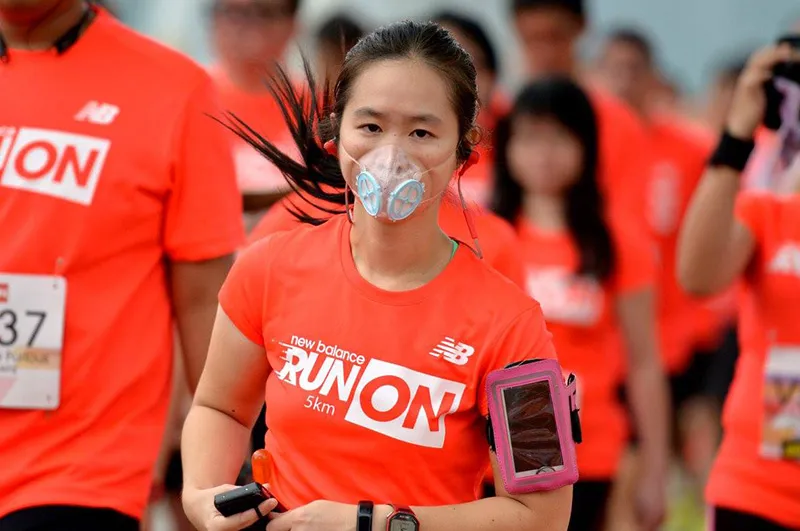
2015-10-06 Combating the Singapore haze and air pollution with the Totobobo mask, by Lifestyle runner blogger Pris Chew 

http://www.prischew.com/general/totobobo-mask-singapore/

Lifestyle blogger Pris Chew running with Totobobo mask

Lifestyle blogger Pris Chew running with Totobobo mask


2015-10-25 Professional review by A Cup Of Milk

http://www.acupofmilk.com/2015/10/totobobo-mask-review.html

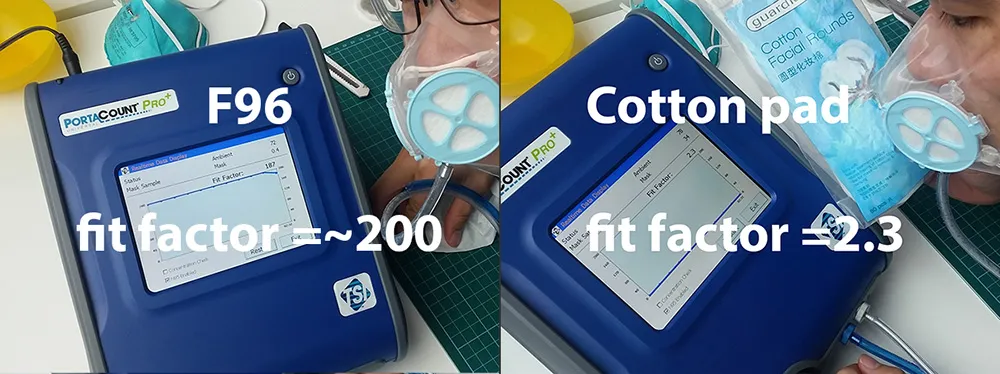
Testing fit-factor of F96 and cotton pad. F96=200, cotton pad = 2.3. F96 is nearly 100 times more protective than cotton pad.

Testing fit-factor of F96 and cotton pad. F96=200, cotton pad = 2.3.
F96 is nearly 100 times more protective than cotton pad.

Totobobo mask has a good feature where you can customize the mask (and the ear loop) by reshaping it with hot water / hair dryer. This is a very crucial feature, a mask that do not fit your face is not an effective mask at all. The rim of the mask is integrated with silver ion which is an anti-microbial agent.
Another good point it’s reusable, you just need to change the filter. When it gets dirty you can wash them.


{ 0 comments }
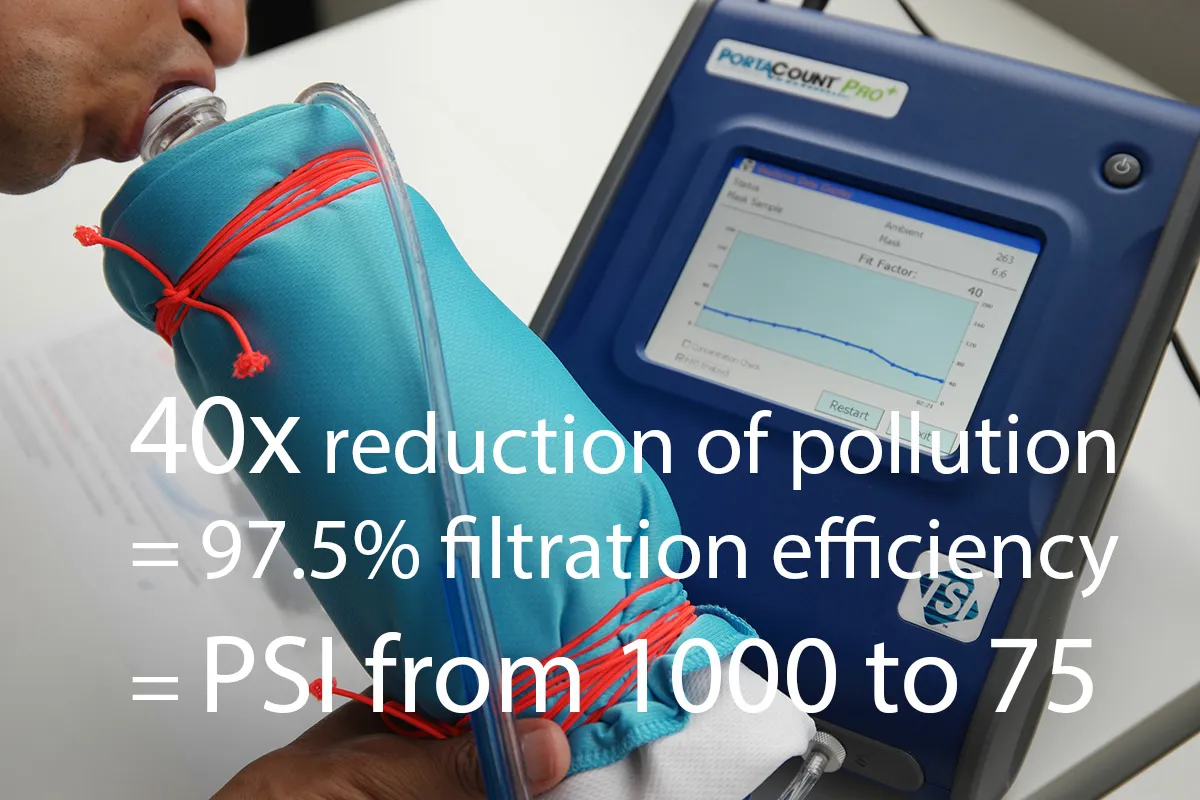
DIY air filter cuts down pollution by 40 folds (97.5% filtration efficiency), bringing down the PSI from super hazardous 1000 to moderate 75.

Quick Glance at the Solution

Updated: 2026-01-27
In a crisis, a powerful DIY air filter can be crafted from everyday materials: a plastic water bottle, a couple of T-shirts, and a string. Lab-tested results using a professional machine showed this simple creation can reduce fine airborne particulate matter (PM2.5, PM10) by up to 40 times, achieving a filtration efficiency comparable to an N95 mask. This is capable of transforming super hazardous air (e.g., PSI 1000) into air of moderate quality (PSI 75), offering a critical layer of protection when certified masks are unavailable.

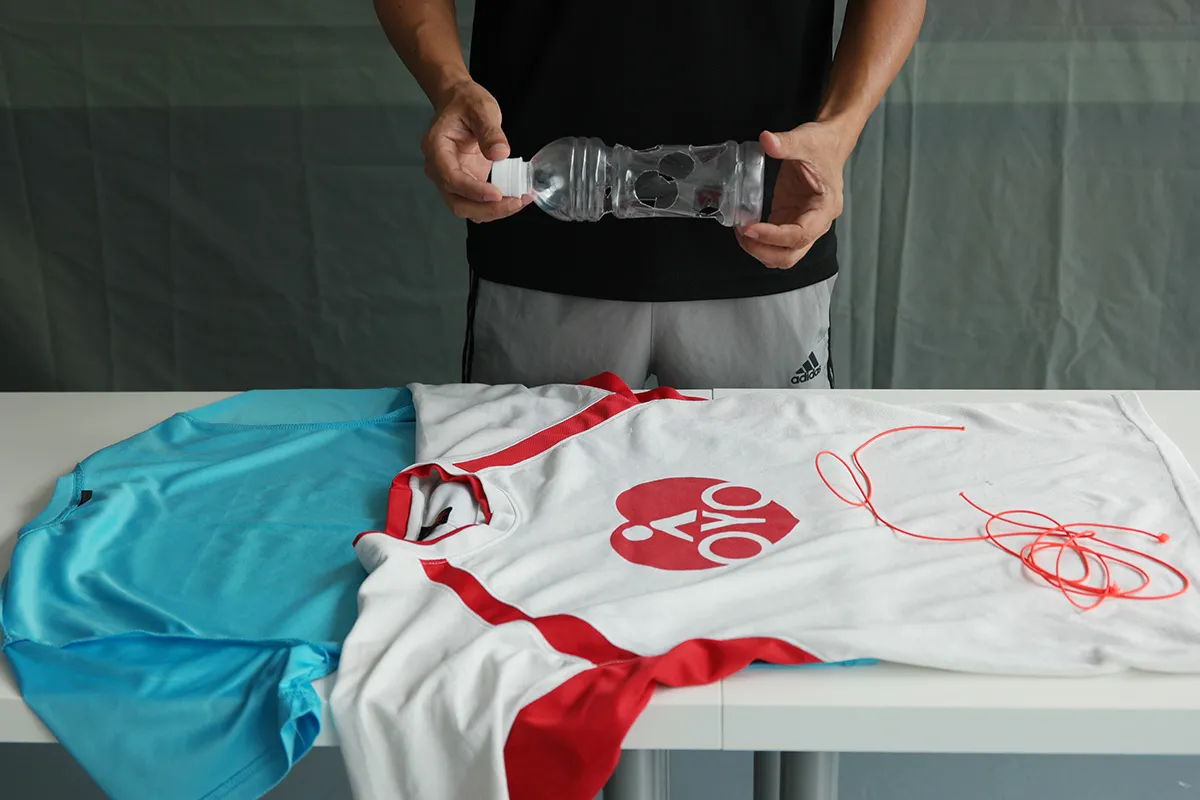
Project Oxygen: DIY air filter from a Water bottle, 2 pieces of T-shirt and 2 pieces of threads
DIY air filter, you need a water bottle, 2 T shirt, 2 pieces of threads, and a knife.

The Unseen Threat: Air Contamination from Fire and Smog

Whether facing the immediate danger of a large-scale forest fire or the creeping, chronic threat of heavy seasonal air pollution—such as the severe winter smog often experienced in major urban centers like New Delhi—the danger remains the same: contaminated air. Oxygen is always present, but the air is choked with microscopic smoke and smog particles (PM2.5, PM10) that pose serious, immediate health risks when inhaled.

The conventional answer is an N95 respirator. Yet, in an emergency or during a widespread pollution event, relying solely on N95 masks presents two major challenges:

  1. Distribution: It is nearly impossible to rapidly distribute certified masks to every person who needs one, particularly in densely populated or remote areas.
  2. Fit: A non-fitting N95 mask is ineffective. Achieving a proper, airtight seal on the face is difficult for most people, and even a small gap renders the filter useless.

This DIY filter provides an immediate, readily accessible alternative.The DIY Emergency Filter Kit

To create this effective air filter, you only need materials easily found at home:

  • A standard plastic water bottle.
  • Two to three clean T-shirts (or enough fabric to create a thick roll).
  • A couple of strings or rubber bands.

Step-by-Step Assembly Guide

  1. Prepare the Bottle: Cut several holes in the middle section of the plastic water bottle. These are the air entry points.
  2. Create the Filter Media: Fold up and tightly roll the T-shirt fabric around the bottle’s middle section, completely covering the holes. The more fabric layers you create—ideally 20 or more—the better the filtration will be.
  3. Seal the System: Use the strings to tightly secure the fabric at the top and bottom edges of the roll. This seals any potential gaps, forcing all inhaled air to pass through the filter media.
  4. How to Breathe: Place your mouth over the bottle’s opening. Suck air in from the water bottle, and breathe out through your nose.

Working Principle and Proven Results

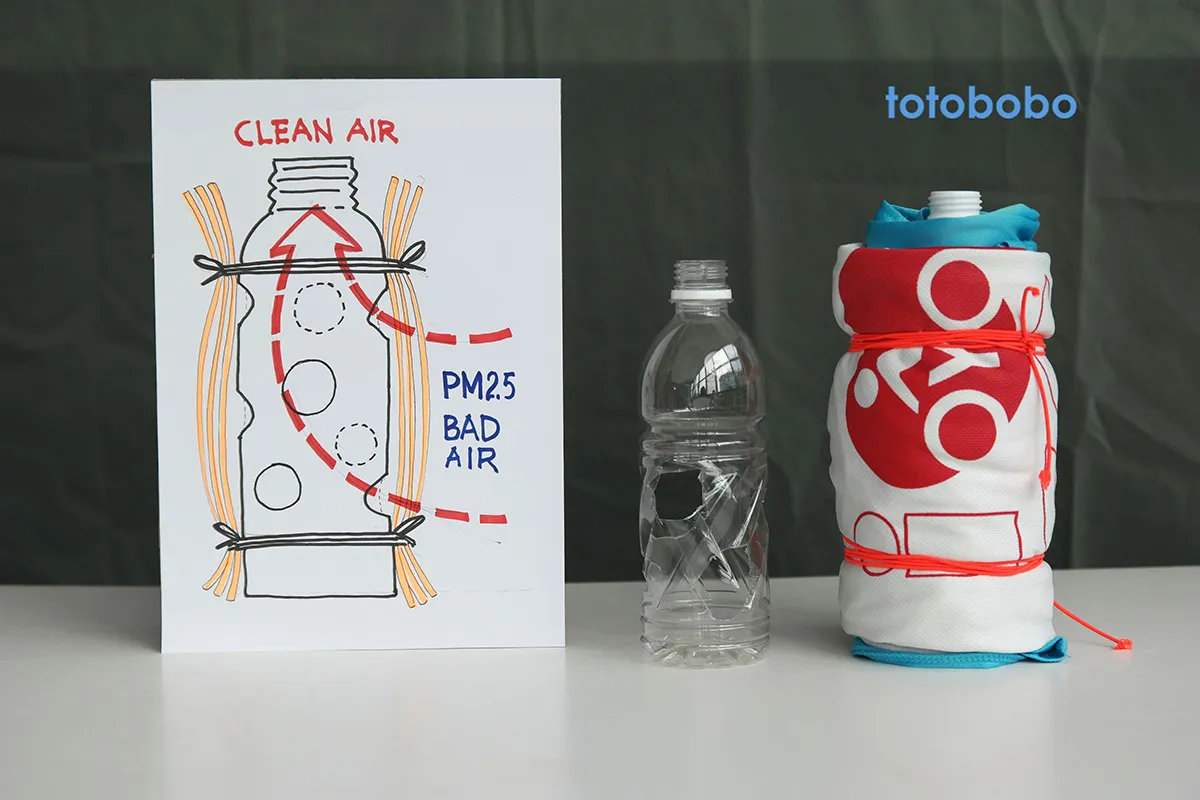
Working principle and finished sample of emergency DIY Air filter from a Water Bottle
Working principle & finished sample of emergency DIY air filter

The polluted air enters the bottle by being drawn through the many layers of T-shirt fabric. The dense, multi-layered textile barrier physically traps the fine particulate matter.

In our laboratory, we measured the performance of this system using a professional Portacount Pro 8038 machine. The results confirmed a substantial reduction in pollution: the filter achieved a 97.5% filtration efficiency, equivalent to a 40-fold reduction in airborne particles. For contexts like the debilitating smog season in New Delhi, where air quality can soar to hazardous levels, this readily available filter provides a crucial and accessible means to substantially improve the air you breathe during a crisis.

A printable PDF file for sharing is available (Emergency DIY Air filter from Water bottle.)

Note: The idea of this DIY water bottle air filter has been demonstrated in a laboratory setting to show its effectiveness in cutting down air pollution. However, the exact filtration characteristic will depend on the fabric material used. This idea has not been certified by any official authority. Users agree to take own responsibility for the use of this idea. Always seek certified and professional protection first if available.

Instruction video

Link to YouTube video

Sponsored by Totobobo mask, a highly customizable facemask for cyclists and bikers.

Totobobo Mask international store

{ 7 comments }


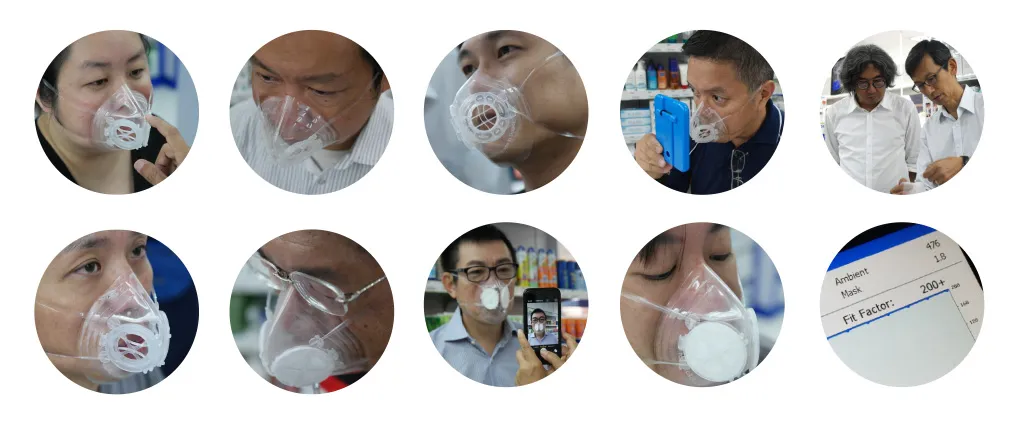
Participants of the mask fitting and validating demo

Participants of the mask fitting and validating demo

Due to the recent haze situation in Singapore, we receive many questions from customers regarding how to fit the mask. This is especially important for children because their lungs are not yet fully developed and are more vulnerable. Wearing an ill fitting mask gives a false sense of security; unaware users may expose themselves in unnecessary risks.

Upon customer’s request, we conducted a Mask Fitting Demo session at the Medic Drugstore at Tanjong Pagar Plaza. Medic Drugstore is our retail partner in Singapore since 2009.

First of all, we need to understand why mask fitting is important. The working principle of a mask (negative pressure respirator) is to seal-off mouth and nose such that the only way the polluted air can get into the mask is through the air filters. If the mask is not fitted properly, ambient air can easily bypass the filters and enter breathing zone directly. Henceforth wearing a poorly fitted mask is similar to not wearing a mask. On the other hand, a well fitted mask allows the users to breathe in cleaned air.

Totobobo mask fitting procedure:

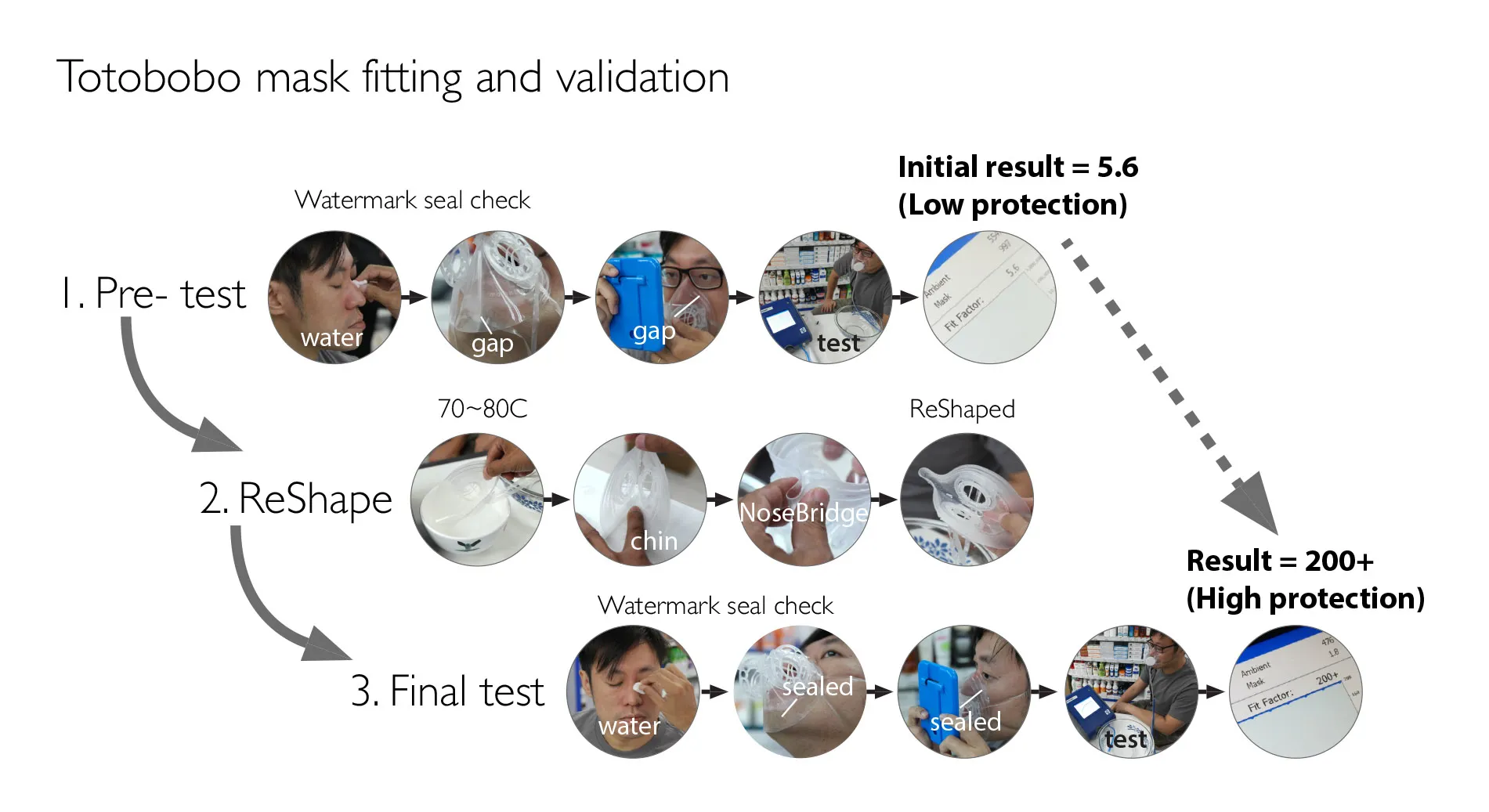
1. Pre-test* – To demonstrate poor fit leads to poor respiratory protection.

2. ReShape to improve the fit - This is an iterative process between watermark seal check and reshaping.

3. Final test* – To demonstrate the high protection performance of Totobobo mask when a good seal is achieved.

*A professional respirator fit-test equipment, TSI Portacount Pro+ 8038, was used to validate the protection performance. Portacount Pro is the gold standard in the industry for respirator testing.

Two important features (unique to Totobobo mask) we demonstrated during the Mask-fitting session:  The Watermark Seal Check (WSC) and the ReShape function.

Watermark Seal Check (WSC):

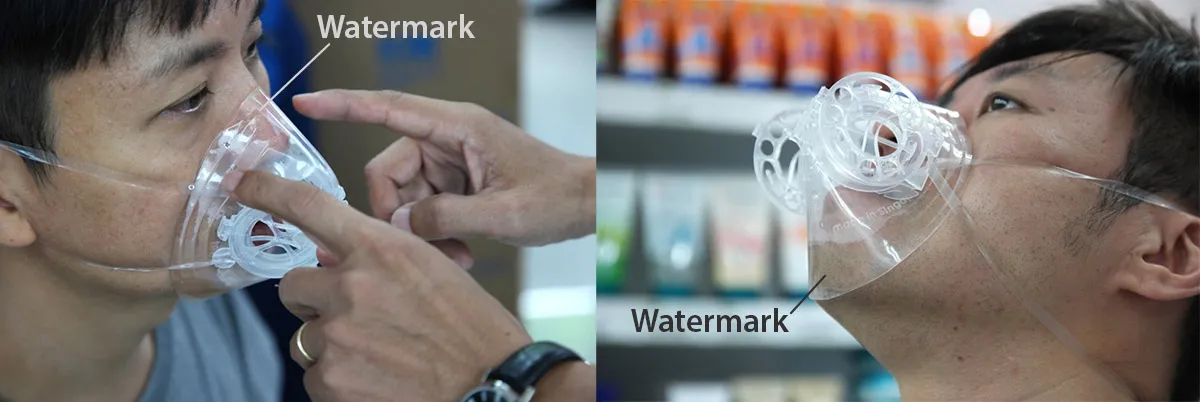
watermark

Watermark shows up where the mask touches the face, also where the seal is

Watermark Seal Check (WSC) is a patented feature of Totobobo mask. It allows users to check the seal by means of “Watermark”, easily and accurately. The “Watermark” refers to the area of the mask changes from translucent to transparent when the mask touches wet skin. A continuous watermark loop around nose and mouth indicates a completed seal.

  • First wet face with water, then put on the mask.
  • Check the edge areas of the mask whether a continuous watermark loop appears around nose and mouth.

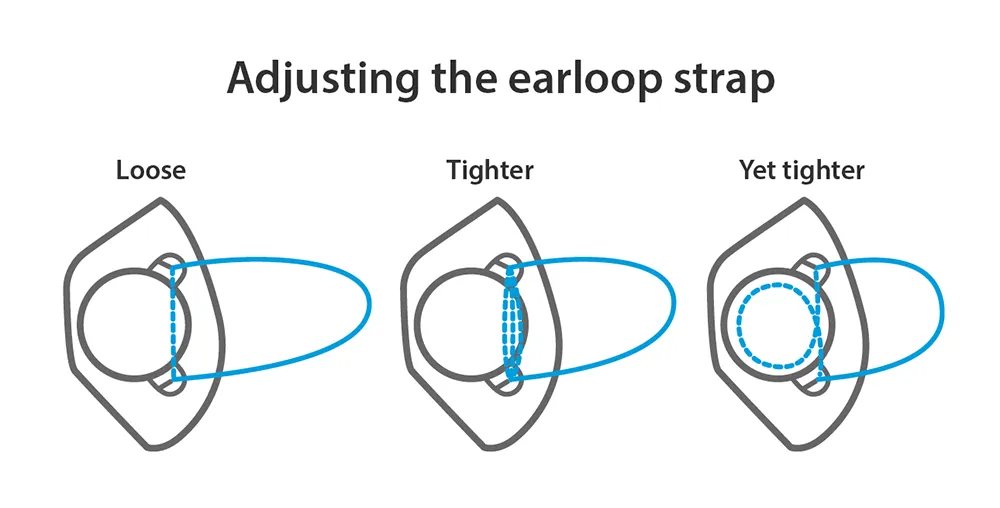
Tips: Sometimes by adjusting the straps (shorter or longer), making it a little tighter or looser, or moving the mask up or down can shift the watermark and change the seal condition.

adjusting earloop

adjust Totobobo earloop by looping the strap around the filter and in between the two small wings


ReShape the mask

Totobobo mask is made of a special polymer which allows re-shaping when it is heated up by hot water or hair dryer. Most of leakage problems occur below chin and around nose bridge can be solved by ReShaping. Here are two approaches to eliminate the gaps in these areas.

ReShape the bottom of Totobobo mask to fit the chin

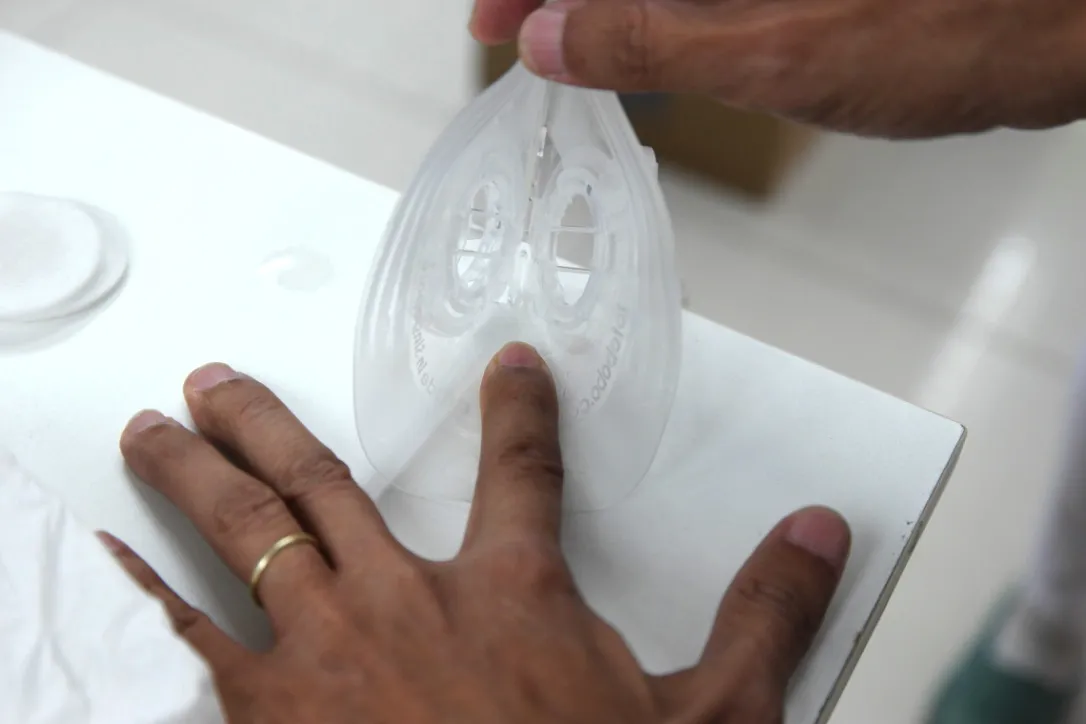
ReShape to fit the chin: Press a finger on the fold line against table top, hold it for 10 seconds.

To eliminate gap below chin – A new mask usually doesn’t fit a face perfectly due to a fold-line formed whilst flat packed. The fold line causes a gap below chin. To eliminate this gap:

  • Dip the mask quickly into and out of hot water a few times (70-80°C, NO boiling water which will damage the mask permanently)
  • Press a finger on the fold line against tabletop, hold it for 10 seconds.
  • Release to check if the fold line diminishes. If the fold line is still obvious, the water may not be hot enough. Redo with hotter water. The lower part of the mask should have been widened up.

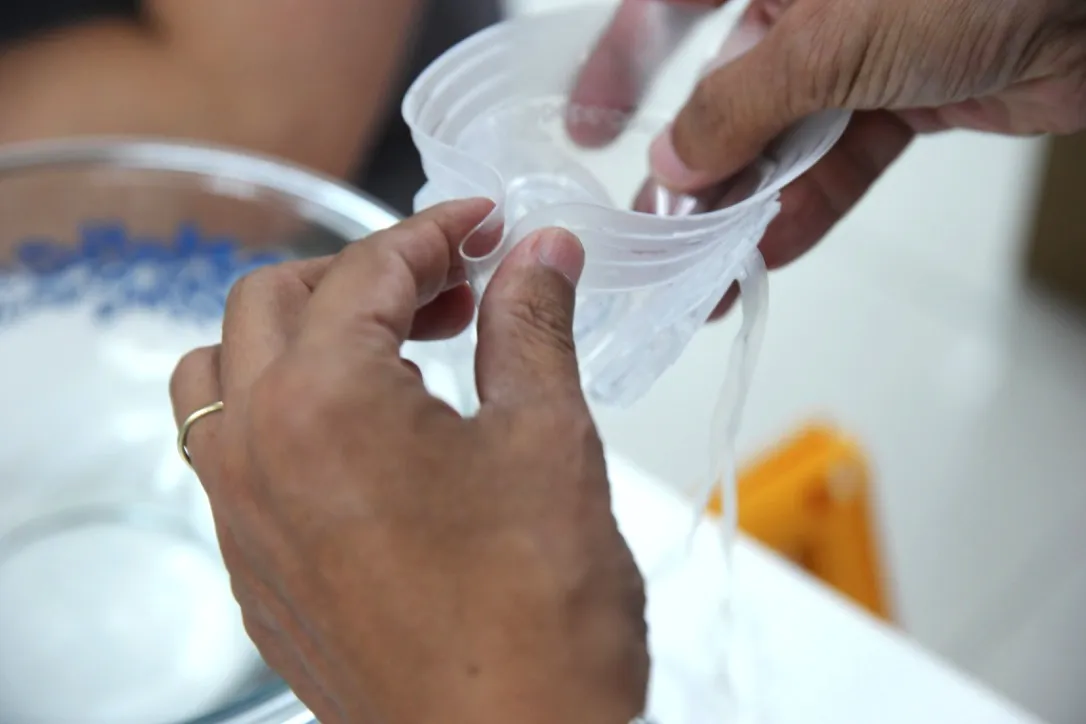
Moulding the nose area and at the same time open up the Totobobo mask to transform it into a 3D shape

Moulding the nose area and at the same time open up the Totobobo mask to transform it into a 3D shape

To eliminate gaps near nose bridge – With the help of Watermark, take note of the location of the gaps (translucent area) next to nose bridge.

  • Dip the mask quickly into and out of hot water a few times (70-80°C, NO boiling water which will damage the mask permanently)
  • Hold the bottom (chin part) of the mask with one hand, use the other hand to help shape the nose bridge area (use thumb and index finger to press at the points where the gaps are observed).
  • Hold the mask in the new shape for a minute or two to fix the shape.
  • Try the newly shaped mask on user’s face with the WSC method. You may need to do this back and forth a few times in order to eliminate all the gaps. But once you achieve it, the new shape can be retained for subsequent uses.

Below is an overview of the “Mask fitting and validation process” for your reference (Click to enlarge).

Totobobo mask fitting demo process


{ 0 comments }