≡ Menu

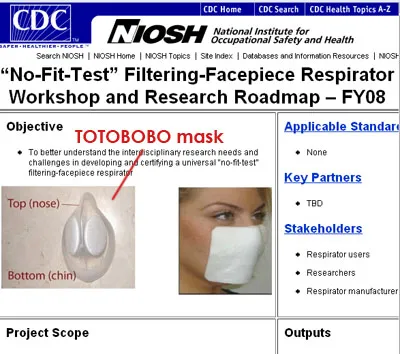
TOTOBOBO mask in NIOSH site

Totobobo mask was spotted in NIOSH NO-FIT-TEST workshop page    Totobobo mask was spotted in NIOSH NO-FIT-TEST workshop page

I was surpriced when my friend show me this page in CDC site. NIOSH, the National Institute of Occupational Safety and Health under CDC, is the US organization who certify the well known N95 mask. What made TOTOBOBO, a little known Singapore invention of respirator mask, appears in this heavy weight website?

No, TOTOBOBO is not certified by NIOSH, at least not yet. The picture of an early version of TOTOBOBO mask found in the NIOSH website is to serve as an inspirational example for a “No Fit Test” filtering facepiece respirator workshop. The workshop will be conducted in Nov. 6 later this year and the objective is:

“To better understand the interdisciplinary research needs and challenges in developing and certifying a universal “no-fit-test” filtering-facepiece respirator”

I think this is totally appropriate and it shows NIOSH recgonize the need to improve the current procedure in order to motivate manufacturers to innovate toward the direction of “No fit test” respirator. 

Why is this big fuss about “No fit Test”?

If you read carefully the fine text of your respirator instruction, you will notice a statement similar to this:

“Before use of this respirator, a written respiratory protection program must be implemented meeting all the requirements of OSHA 29 CFR 1910,134 such as training, fit testing, medical evaluation, and applicable OSHA substance specific standards.” 

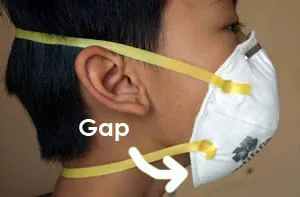
The simple fact is, the rated protection value will be drastically reduced if the mask does not fit your face, and there is no other ways to tell except by doing a fit-test. Buying a mask is easy, but getting a mask fit-tested on each individual is a challenge. In emergency situation like flu pandemic or haze outbreak, it is simply not possible to get everyone a fit tested at once. 

One can start to sense the “pain of fit test” and how touchy this issue is from the following comment in one of the NIOSH science blog :

—————————————————–
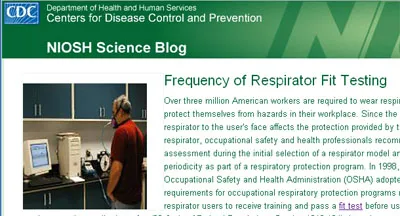
NIOSH debate how often to fit test

NIOSH debate how often to fit tes

Hopeful to see Fit-Test to be lifted– Edward Hernandez, City of Hialeah, Fire Rescue says:- Thank you for proposing a study as this. For a while now this OSHA (Fit-test) requirement  has been a burden to our Fire/EMS service.

Hopeful to see Fit Test to be simplified-Peggie Reinhardt, RN BSN, says:

I would be interested in this study, we currently fit test our employees annually. If this process could be shortened or redesigned so that it was easier to do would help tremendously.

Fighting to keep Fit-Test in organization– Sgt. Julie Love says:

I would be interested in being part of this study on the law enforcement side. We fit test our officers annually but many departments do not. Law Enforcment traditionally has fallen down in this area as many agencies just give their officers their masks without any fit testing. We also fight the battle with our management with what is mandated.

Worry that No-Fit-Test= Not Safe-Kevin MacDonald says:

 I am concerned that changing the fit test frequency while cost effective may defeat its overall purpose. when fit testing went from every 6 months to one year as a requirement of OSHA it was a step back.

Confused and concern-Kelly Russell says:

I am glad this study is being done. Respiratory fit testing is expensive for employers and it will be good to have a current answer when asked why we have to do the testing so often….or maybe not so often as the case may be.

——————————————————-

No matter what, the setting up of this workshop itself is already a breakthrough, and we are definitively happy to be associate with the solution side of the problem. We hope the result of the workshop will bring more practical innovation into the design and certification of respirator, especially taking people like housewife and children who don’t have access to fit-test equipment but also deserved to have good protection when situation come.
{ 1 comment }

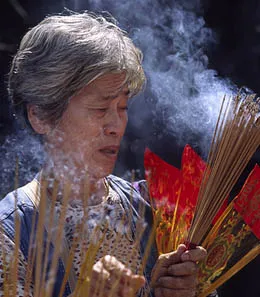
If you burn incense at home regularly you may be putting your children at a risk of developing cancer or lung problems. TOTOBOBO mask may be the only practical solution for children who cannot avoid exposed to the harmful incense smoke in many Asian cities.

Incense burning smoke

Smoke particles from burning incense were found to cause cancer of the upper respiratory track. A 12 years long “Singapore Chinese Health Study” of more than 61,000 ethnic Chinese adults living in Singapore discovered ‘Among non-smokers who used incense during the day or at all times, the increased cancer risk was three times that of smokers.’ said Prof Koh Woon Puay of National University of Singapore.

Children surgical mask

The best way to avoid such risk is not to burn any joss-stick. However, incense has a significant meaning in the minds of many Asian cultures such as Hindu, Buddhist or Taoist. Mr Chung Kwang Tong, secretary-general of the Taoist Federation Youth Group in Singapore, explained that for Taoists, the smoke from incense is a way of communicating with the deities. Even for those who don’t practice any of these religions, may have inhaled incense smoke involuntary. Children are particularly at risk, there is mounting evidence that exposure to air pollution has long-term effects on lung development in children.

Children wearing N95 mask

If stop burning incense is not an option, then protecting the vulnerable children with a face mask should be the second best option, right? To filter out the harmful smoke effectively, a face mask must produce two conditions simultaneously. First it needs to seal the user’s nose and mouth snugly. Second the filter material must be able to filter out those fine smoke particles. The use of simple surgical mask doesn’t help, as air-leaks are all around the face and smoke can easily by-pass the mask to enter the lung. Upgrade to an N95 respirator can help, only if you have access to a fit-test setup to ensure the mask is making a proper fit. Otherwise, if air-gaps exist in an N95 mask, it makes very little difference from using a cheap surgical mask. Buying an N95 mask is easy, but getting it fit-tested is not. Much to disappointment, there is no N95 mask available for children.

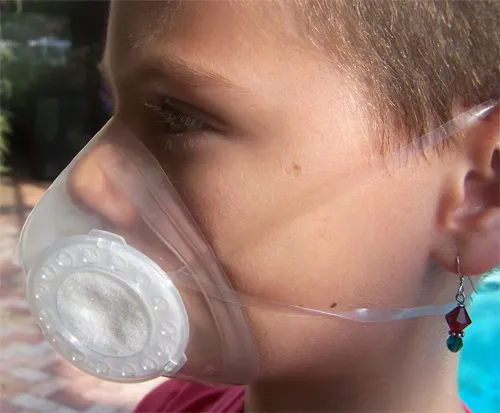
Children wearing Totobobo mask

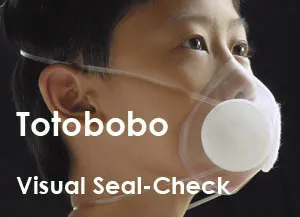
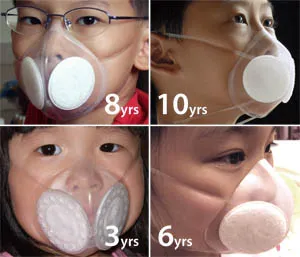
TOTOBOBO mask can be cut to fit children (and adults), and parents can now fit-check the mask without the need of expensive fit-test equipments. The name TOTOBOBO (totobobo.com) suggests the solutions in Chinese: TOTO (transparent) BOBO (protection for baby). Parents can see through the transparent mask to examine the seal on the children face. We compared the visual fit-check method with a high-end fit-test setup call Porta-Count in hospital. The result shows strong correlation between the visual-check method and the official fit-test. “User seal-check has never been able to reach such accuracy. It is possible to ensure protection by simply looking through the mask.

It looks like TOTOBOBO mask is going to provide the much needed alternative to surgical masks or disposable N95 mask, especially for children suffering from incense smoke or other air pollution.

{ 5 comments }

Common sense would suggest smaller particle always penetrate filter easier. But this is not always, as state in the FAQ of CDC site:

1. How effective are the Part 84 filter respirators against particles smaller than 0.3 micrometer in diameter?

The 0.3-micrometer diameter used in the certification testing is approximately the most penetrating particle size for particulate filters. Although it seems contrary to expectation, smaller particles do not penetrate as readily as 0.3-micrometer particles. Therefore, these respirators will filter all other particle sizes at least as well as the certified efficiency level.

2. How effective are the Part 84 filter respirators against asbestos fibers or other rod-shaped particles?

Although fibers or rod-shaped particles may have very small cross-sectional diameters relative to their lengths, the Part 84 particulate filter respirators will be at least as efficient against this particle shape as the certified efficiency level.

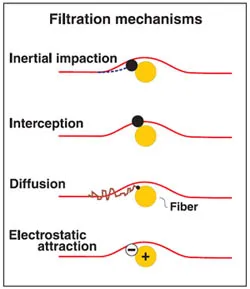
CDC is right, this is contrary to expectation. The reasons is explained in another document in more details. Here is a diagram from pg. 9 of the document showing there are actually four different collection mechanisms govern particulate air filter performance: inertial impaction, interception, diffusion, and electrostatic attraction:

4 different collection mechanisms of particulate filters

The first three of these mechanisms apply mainly to mechanical filters and are influenced by particle size.

  • Impaction occurs when a particle traveling in the air stream and passing around a fiber, deviates from the air stream (due to particle inertia) and collides with a fiber.
  • Interception occurs when a large particle, because of its size, collides with a fiber in the filter that the air stream is passing through.
  • Diffusion occurs when the random (Brownian) motion of a particle causes that particle to contact a fiber.
  • Electrostatic attraction, the fourth mechanism, plays a very minor role in mechanical filtration. After fiber contact is made, smaller particles are retained on the fibers by a weak electrostatic force.

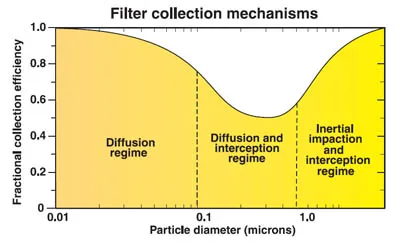
Impaction and interception are the dominant collection mechanisms for particles greater than 0.2 ?m, and diffusion is dominant for particles less than 0.2 ?m. The combined effect of these three collection mechanisms results in the classic collection efficiency curve, shown in the following Figure:

Fractional collection efficiency versus particle

The TOTOBOBO filters is a type of electrostatic filters which contain electrostatically enhanced fibers. Such fibers actually attract the particles to the fibers, in addition to retaining them. Electrostatic filters rely on charged fibers to dramatically increase collection efficiency for a given pressure drop across the filter.

Following table gives a rough idea of how small a micron is:

 Substance  Micro-meters (microns)  Inch
 90% of Wood smoke particles are smaller than   1 micron  0.00004
 Bacteria (average)   2  0.00008
 Red Blood Cell   8  0.0003
 Talcum Powder   10  0.0004
 White Blood Cell  25  0.001
 Human Hair   70  0.003
 Grain of Table Salt  100  0.004

Read more:

Used filters from India

{ 0 comments }

7 years girl Kayla, fighting Leukemia with the support from her mother Debbie

World’s first fitting mask for children

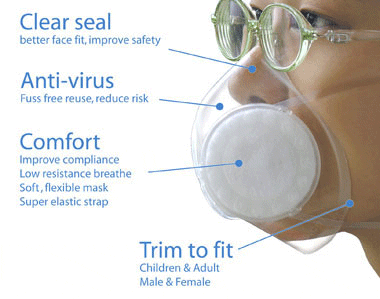
TOTOBOBO is the first fitting mask designed with the need of children in mind. It can be cut to fit children aged 5 and above. It may fit younger kids depends on individual face size. The reusable mask is made of a special anti-virus and softy plastic material.

L. P. Ontario, Canada
I have tried the TOTOBOBO mask a few times and I like it very very much, it compare well or better than my previous North half mask. The only thing I might change about it is to make the strap a bit wider as it kind of cuts into my face a bit. I love the flexability of being able to use it for my children. It’s difficult to find anything in a smaller size and with cold and flu season upon us it is a useful tool when someone is sick here! Thanks and I am considering ordering more!

Thomas Eric Johnson Ph.D Thailand, Bangkok

My son and I cough and suffer from pollution in Bangkok. Other parents at his school think he is sick all the time, but when he comes home and is in a clean room, he stops coughing. We received the masks and my wife trim it to fit our son. You know what, the mask did fit! I used a 3M mask before but the TOTOBOBO is more flexible and it fits children as well. I could not find any other mask that would fit him. The TOTOBOBO works fine. Our son wares it regularly when the weather is dry and dust and pollution increases.

“Totobobo mask is far superior to any other mask on the market. Period!”

Kayla wearing a transparent Totobobo Mask


My daughter, Kayla, has been severely immunocompromised following chemotherapy. Doctors advised us that her immune system would not fully recover for another six months.

Before we used the Totobobo mask, Kayla frequently fell ill. When she attended school without protection, she was hospitalized for two weeks every month for three consecutive months—a total of 45 days.

The results with the Totobobo mask have been undeniable. Since January 2009, Kayla has worn the mask every day, and for 14 consecutive months, she experienced no sickness, no colds, and zero hospitalizations, defying the doctors’ predictions. The mask proved to be the reliable safety net that worked for us.

We recently made the mistake of letting our guard down, thinking sufficient time had passed to stop wearing the mask. Kayla became sick almost immediately and has been ill for the past two weeks. We learned a crucial lesson the hard way: wear the mask, no sickness; stop wearing the mask, get sick. It is truly that simple.

Update: Kayla is tested cancer free (2010-06-01)

– Debbie, Kayla’s mum @ www.freehelpforcancer.com

The Search for a Child-Sized Safety Mask

After the devastating San Diego fires in the summer of 2008, Joe Flynn was determined to keep her son safe. While she could easily purchase N95 masks for herself, she discovered a critical problem: it was virtually impossible to find smaller masks correctly sized for her child, especially within the U.S.

This struggle was echoed across the country. In Knoxville, Bob William was also searching tirelessly for a small N95 mask to include in his emergency kit for his six-year-old boy. The lack of a secure, comfortable fit on a small face made every option he found inadequate.

For both Joe and Bob, the Totobobo mask proved to be the definitive solution. Upon finding it online, Bob exclaimed, “This mask is exactly what I am looking for.”

After the masks arrived, the initial relief turned to delight. The unique design allowed the Totobobo mask to fit securely and comfortably on their children’s little faces—a vital necessity for true protection that they had failed to find anywhere else.

“It is the only mask out there that fits my boy and give him adequate protection.”

— Bob William

Read more about TOTOBOBO mask for children :

Buy Totobobo mask

Say no to pollution in school buses

time for a better mask for children

protect children from incense smoke

How to‘s

How to customize TOTOBOBO mask for your children?

How to wash TOTOBOBO mask for reuse?

How to check the mask-to-face-seal without fit-test equipment?

Download Totobobo mask simulator to check if it fit your kids

Buy TOTOBOBO mask for children

{ 7 comments }

Ian MacKinnon in Bangkok Wednesday July 30 2008

offering incense in a temple

Burning joss sticks lit as an offering in shrines and temples fill the air with cancer-causing toxins that are every bit as deadly as traffic fumes and cigarette smoke, says Dr Manoon Leechawengwong.

Dr Manoon, who has just completed a two-year study of temple workers tasked with clearing the smouldering sticks, found the cocktail of chemicals in the smoke put them at risk of leukaemia, lung, blood and bladder cancers.

“One joss stick creates the same amount of cancer-causing chemicals at one cigarette,” said Dr Manoon, who led the research. “I knew there would be some carcinogens, but I was surprised by the levels.”

Joss sticks are a type of incense used in worship in many Asian countries. In Buddhism they are believed to aid spiritual communication and serve as an offering.

Dr Manoon’s study was conducted among 40 workers in three temples at Ayutthaya, Chachoengsao and Samut Prakan, sites chosen deliberately far from Bangkok’s traffic pollution. The findings were compared with another 25 people living in a joss-stick free environment.


Temple workers were exposed to high levels of benzene, also known as petroleum ether, related to leukaemia; butadiene involved in blood cancer; and benzo[a]pyrene that can cause lung, bladder and skin cancers.

The level of benzene in the temple workers was four times higher than normal, butadiene was 260 times higher, and benzo[a]pyrene – the most dangerous carcinogen – 63 times greater.

Analysis of the temple workers blood and urine samples discovered damage to their DNA, with a correspondingly lower capacity of their bodies to repair that damage.

“We know from our study that there’s DNA damage,” said Dr Manoon. “But what we don’t know is if they will develop cancer. Certainly they have a greater risk. It’s like smoking. Not all smokers get cancer, it’s about 20% .”

Source

——–

Blogger Fong Yoong Kheong offers the following practical solutions:

Solution 1 : Open Windows to ensure proper air flow, so as to reduce the amount that you have to breathe in.

Solution 2 : Wear a N95 Mask or Chemical Protection Mask. Like most people, he thought this will be simple. Just don a mask to prevent the inhalation of toxic substances. But unless you have a fit test equipment and do a proper fit-test, the assurance of protection can be an illusion.

Solution 3 : Learn from SAF – Simulate the smoke. (I really like this one)

Solution 4 : Install the Urn outside your house

Solution 5 : Buy premium grade Incense. They cost much higher but they are made of premium grade of wood and does not release toxic smoke.

Source

{ 3 comments }

TOTOBOBO art

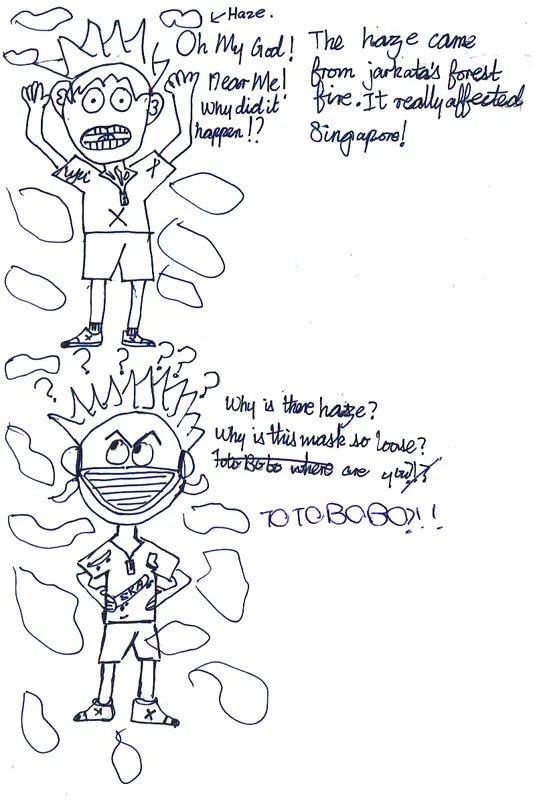
Watching over my shoulder, my son also caught a little “creative bug”. Here are some of his drawings related to the TOTOBOBO mask : )

I will update this page over time.

totobobo artwork 1

{ 0 comments }
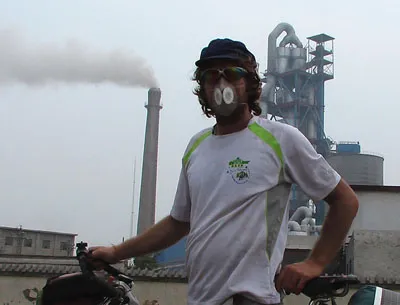
Hervé Bonnaveira wearing the Totobobo mask while cycling in air pollution outside of Beijing.
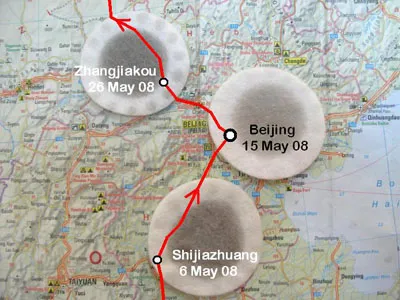
Used Totobobo filters through the air pollution from ShijJaZhuang, Beijing to ZhangJiaKou.

10 June 2008 Hervé Bonnaveira

Crossing a megalopolis by bike gives you a good idea of how polluted it is. Arriving in the Chinese capital from the South we followed a long line of thermal power stations and factory chimneys, which turned our totobobo anti-pollution filters black after 6 hours of use. Arriving in the Chinese capital from the South we followed a long line of thermal power stations and factory chimneys, which turned our totobobo anti-pollution filters black after 6 hours of use. Surprisingly, once we entered the city of 15 million, crossing its six ring roads and arriving on Tiananmen Square didn’t pose problems when it came to pollution, as the light grey colour of our mask filters shows (see photo below). Surprisingly, once we entered the city of 15 million, crossing its six ring roads and arriving on Tiananmen Square did not pose problems when it came to pollution, as the light grey colour of our mask filters shows (see photo below). As we left Beijing we were spared the pollution on the first day, crossing the Great Wall in a setting of lush green hills, but soon found ourselves back in the soot-blackened industrial countryside as we continued North to Inner Mongolia. As we left Beijing we were spared the pollution on the first day, crossing the Great Wall in a setting of lush green hills, but soon found ourselves back in the soot-blackened industrial countryside as we continued North to Inner Mongolia.

read more

Related:
Protect your lungs when riding in the city

12 useful features for cyclist

How to clean TOTOBOBO mask for reuse?

{ 5 comments }

Vietnam, March 2008 — When Journeys Crossed Paths

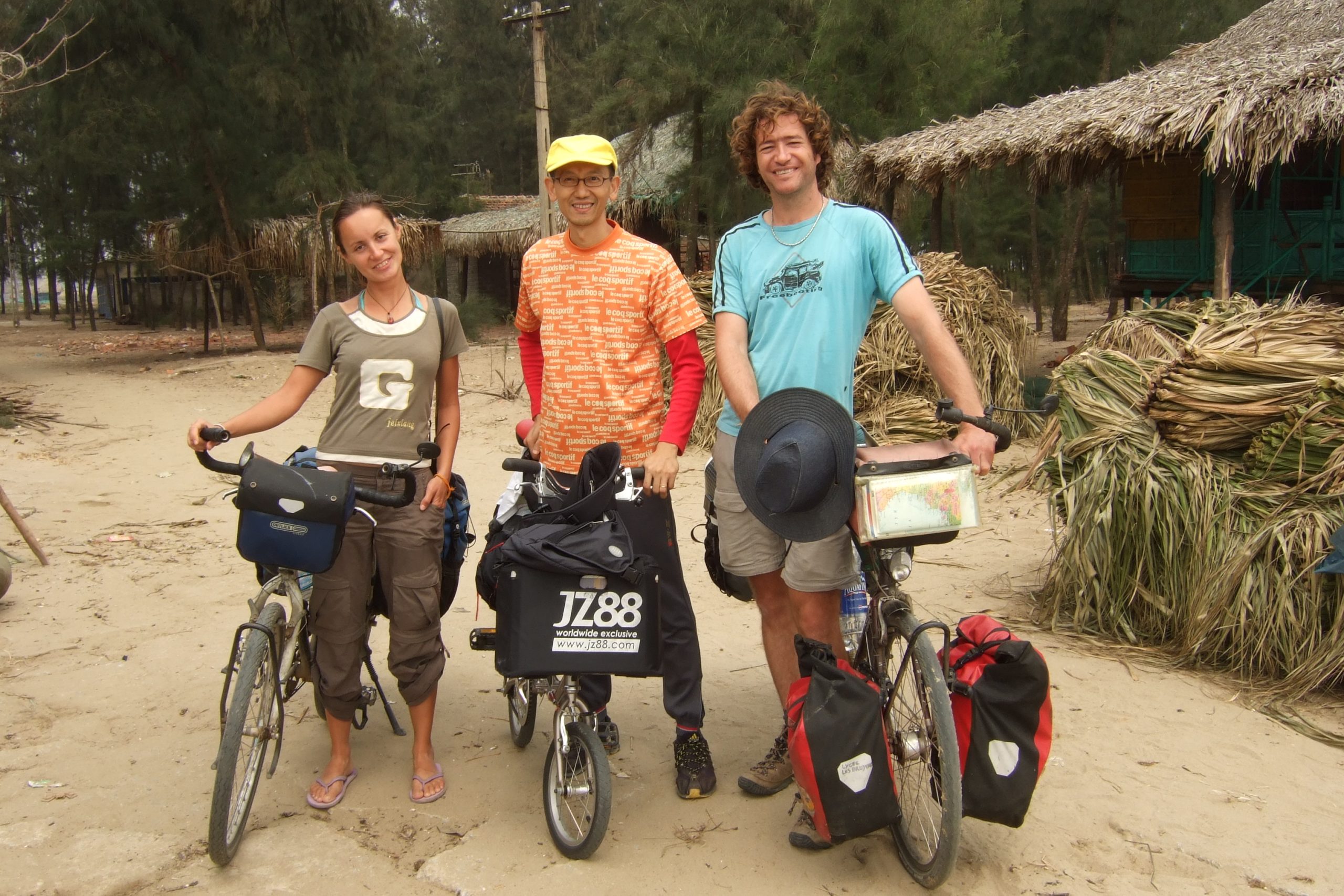
Between March 3 and March 13, 2008, Francis Chu, the Singapore-based inventor of the Totobobo Mask, joined Goska Romanowicz and Hervé Bonnaveira of Dévélotour Asia for an unforgettable nine-day cycling adventure through northern Vietnam.

Francis from Totobobo joining Herve and Goska of DeveloTour in Vietnam

Their route took them from the bustling streets of Hanoi to the stunning coastline, where they boarded a boat bound for the legendary Ha Long Bay. This meeting marked a significant point in Dévélotour’s expedition — the 7,000 km milestone of their 16,000 km, year-long journey across Asia.

For Francis, it was more than just a ride; it was an immersive experience into the heart of Dévélotour’s mission — exploring sustainability, documenting environmental challenges, and living the reality of air pollution that millions face daily in Asia.


A Journey of Discovery — and Data

Throughout the trip, Hervé and Goska continued their pioneering environmental work. As part of Dévélotour’s mission to observe and visualize air pollution, they had developed a simple yet powerful method using Totobobo filtration masks.

In every country they visited — from India to Thailand, Vietnam, and China — they wore the masks to protect their lungs while cycling through major cities and rural roads. Every six hours, they replaced the mask filters, collecting visible evidence of the pollution levels they encountered.

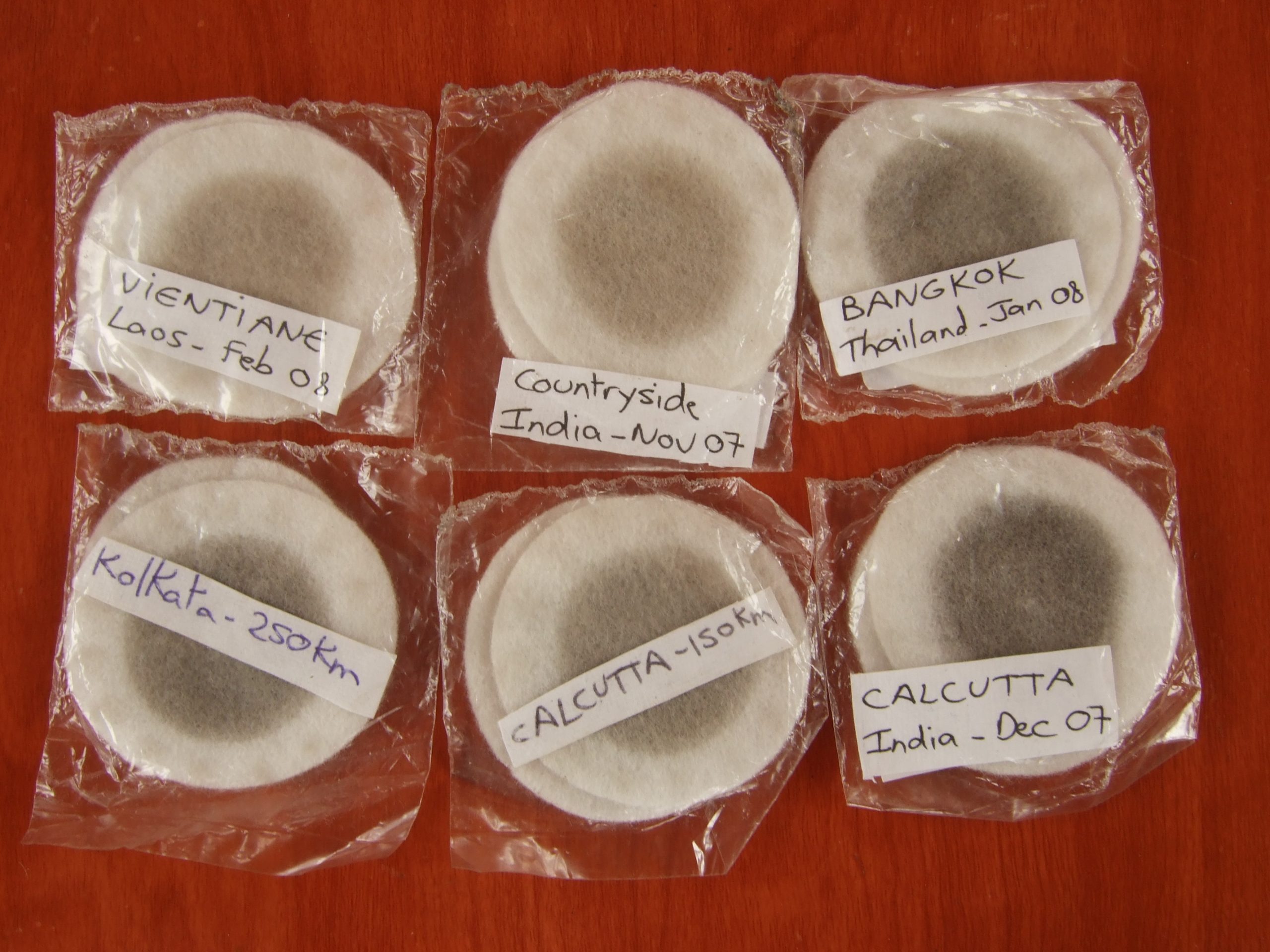
Totobobo filters after 6 hours of use in Calcutta, India, Bangkok, Thailand, Laos and Vietnam

By the end of the journey, the couple had accumulated a stunning — and sobering — record: a set of filters showing a gradation of grime, each one a snapshot of the air quality in a different Asian city.

Those blackened filters told a powerful story — the particles trapped in them were the ones that would have entered their lungs without protection.


Totobobo Mask: Tested on the Road

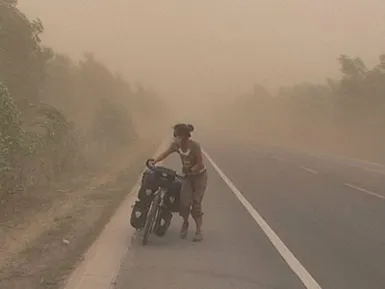
Cycling in sand storm

During their days together in Vietnam, Francis and the Dévélotour team tested the Totobobo mask in real-world conditions — long rides, high humidity, and constant exposure to motorbike traffic.

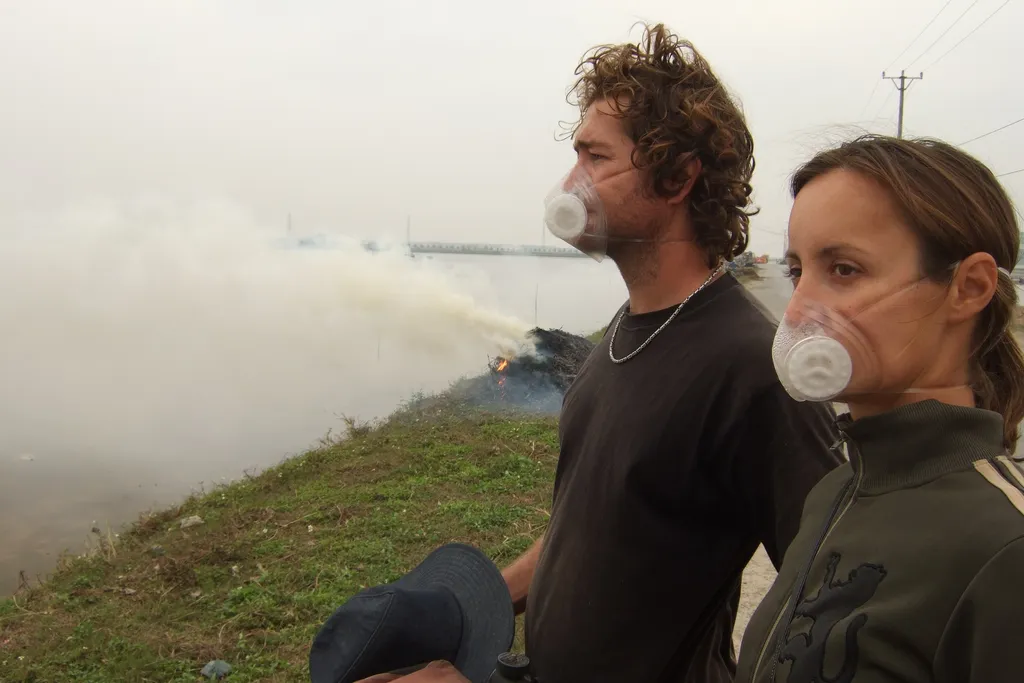
Testing Totobobo filters in air pollution in Vietnam

The mask proved to be lightweight, effective, and surprisingly comfortable, even during hours of intense cycling. The cyclists found that breathing through the mask was far easier than inhaling the thick, exhaust-laden air that hung over many urban areas.

However, the humid tropical climate posed a unique challenge: moisture accumulation inside the mask during prolonged use. For Francis, this firsthand experience provided invaluable insight for refining the mask’s design for future users.

“It was the first time Totobobo was tested over long distances in such demanding conditions,” Francis noted. “The feedback from Goska and Hervé was essential — it helped shape improvements that made the mask even more practical for cyclists.”


Capturing the Journey

Throughout the nine days, Hervé kept a video diary of their shared journey — later compiled into the Dévélotour documentary DVD — while Francis captured stunning photographs of the landscape, the people, and the powerful contrast between natural beauty and human pollution.

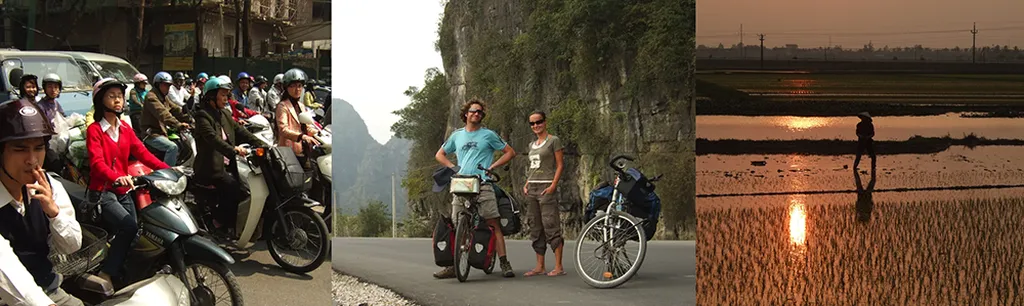
Contrast between natural beauty and human pollution, Vietnam

Together, their records form a vivid picture of what cycling across Asia’s rapidly changing environments really feels like — the rhythm of the road, the warmth of local encounters, and the invisible threat that hangs in the air.


Air Pollution: A Visible Problem Made Clear

The filters from different cities revealed a stark truth: across much of the Indian subcontinent and Southeast Asia, air quality was alarmingly poor — not just in industrial cities but even in rural areas.

Airborne particulates, often invisible to the naked eye, filled the air everywhere they rode. Without masks, breathing was difficult and sometimes painful. With Totobobo, the difference was immediate — clearer breathing, less irritation, and a tangible sense of protection.

Displayed below (or in their film) are the Totobobo filters from their journey — each one darkened by the air it purified. They stand as a visual testament to the reality of pollution across Asia and a reminder of how vital clean air is to human health.

Continuous exposure to such poor air quality, without protection, can lead to serious respiratory diseases and long-term lung damage — something Dévélotour and Totobobo hope to raise awareness about.


Reflections from the Road

For both Dévélotour and Totobobo, this collaboration in Vietnam was more than a meeting of minds — it was a meeting of values 🌱 . Each shared the belief that innovation, education, and exploration can drive meaningful environmental change.

The nine days on Vietnam’s roads became a living laboratory — where ideas about sustainability and design were tested under the open sky, one pedal stroke at a time.


About the Project

About Dévélotour Asia

Founded by Goska Romanowicz and Dr. Hervé Bonnaveira, Dévélotour Asia is a year-long cycling expedition covering 16,000 kilometers across Asia to raise awareness about sustainable development, pollution, and climate issues. Their journey documented both the environmental challenges and the inspiring solutions found in local communities.
👉 Learn more: [Dévélotour documentary page]


About Totobobo

Invented by Francis Chu in Singapore, the Totobobo Mask is a reusable, lightweight air respirator designed for cyclists, commuters, and anyone living in polluted environments. Its unique transparent design and replaceable filters allow users to see — and measure — the air they breathe.
👉 Discover Totobobo: [Totobobo official]

Related:

How to choose a pollution mask for cyclist?

How to clean TOTOBOBO mask for reuse?

Beijing: dirty on the outside, clean on the inside?

The Bangalore test

Your masks are very useful in India, thanks!

{ 5 comments }

“Totobobo is far superior to any other mask on the market. Period!”

Kalya, time for a better mask to protect children
Kayla, with her Totobobo mask on

After the Chemo Kayla is still immune-compromised. This mask is our safety net that has proven its workability.
When Kayla did not have the mask and went to school she ended up in the hospital for two weeks, every month, for three months, totalling 45 days. With the mask -no sickness, no hospitalizations, no colds, nothing.
Your mask is far superior to any other mask on the market. Period!?

– Debbie Witte, Kayla’s mum @ www.freehelpforcancer.com

Debbie knew that her daughter Kayla needed proper respiratory protection if she wanted to play with other children. Kayla tried all sorts of masks: surgical masks, N95 masks but none of these work. Due to her compromised immune system after the Chemo-therapy, Keyla falls sick easily time after she plays with other kids. Undefeated, Debbie continued to search. One day, a Google search led her to the Totobobo mask. After studied the website, she decided to give it a go. Much to her delight, the Totobobo masks works!

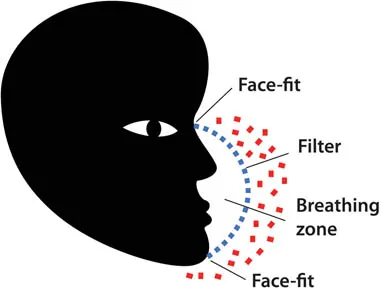
Filter + Face seal = good protection
The principle of how Totobobo mask work is simple: Isolation (good seal) and filtering.

principle of respiratory mask protection
Good protection = good seal + good filter “Good protection is built on two factors: a good filter and a good seal.

A surgical mask is not good enough

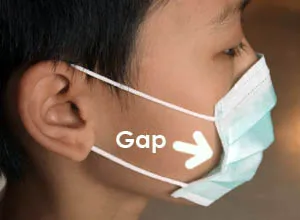
You may have seen the news on TV that many school kids in Asia wearing surgical masks during the SARS. But the fact is surgical mask was not designed to prevent air-borne contamination. There are gaps from both sides that viruses can bypass the mask easily.

sugical mask showing gaps from both sides

A surgical mask is designed to protect nurses or surgeons from contaminated blood splash during an operation. In Japan, it is commonly used to reduce the risk of spreading the flu virus from the wearers when they are sick. The protection value of surgical mask from airborne virus is a big question mark.

N95 mask effectiveness: fit-testing is a problem

Adult N95 mask big gaps on child's face

Respirator (e.g. N95 mask), on the other hand, is designed to protect the wearer from airborne virus. This is only possible if the respirator is making a good seal on your face such that air has to go through the filter before entering the breathing zone. However, a proper fit-test can only be conducted by a trained specialist with special equipment, which is simply too complicated for the public.

Manufacturer comes up with “user seal check” which typically involve blocking the filter and blow into the mask while wearing it. To feel that if there is an air leak from gaps around the mask. But such practice is questioned by a study from the Prince of Wales Hospital in Hong Kong. The study suggested there is 25% of failure rate when trained users apply the standard “user seal check”. The standard user seal check recommended by most manufacturers is just too ambiguous and unreliable. “It’s usefulness as a pre-use test must be questioned”, the report concluded.

Another study “Respiratory Donning in Post-Hurricane New Orleans” (US CDC, May 2007) found 76% of participants were not able to demonstrate proper donning for a good seal and their protection has been compromised.

TOTOBOBO mask improve user seal check by 25%

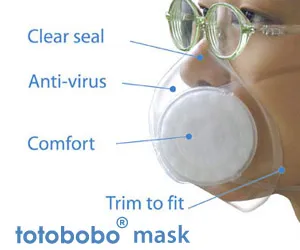
Main features of TOTOBOBO mask

When looking for a respirator to protect his kids, Francis Chu, the inventor of TOTOBOBO mask, encountered the same frustration as Debbie. He became aware of the many difficulties faced by parents and determined to come up with a better solution. He applied his expertise in product design and experimented with hundreds of prototypes. Finally, he came up with an ergonomic design that fits most people and can be customized to fit children.
He understands that beyond a good seal and good filter, other issues like comfort, cleaning, reuse, portability are all important factors need to be addressed before the mask can be considered as “Child Friendly”.

Following is a summary of the issues and respective solutions embedded in Totobobo:

PROBLEMS………………………>…….. SOLUTIONS

Children’s face size varies …….>.. Trim it to fit small faces

Hard to determine a good seal ….>.. VSC Visual Seal Check makes it easy

Difficult to disinfect (for reuse) ….>.. Anti-virus mask easy to clean and safer to reuse

Children’s skin is delicate………>… FDA approved, non-allergic soft material

Not easy to carry………………..>……. lightweight, folded flat

Parents and school teachers from different parts of the world have discovered a new solution for their children. If you are looking for an effective mask to protect your child, TOTOBOBO is exactly what you are looking for!

“It is the only mask out there that fits my boy and give him adequate protection.”
– Bob Williams, Knoxville, USA

—————————————————–

Read more about TOTOBOBO mask for children :

The best-fitting mask for children

Say no to pollution in school buses

Time for a better mask for children

Protect children from incense smoke

Transparent mask make easy seal check

How to’s

How to customize TOTOBOBO mask for your children?

How to wash TOTOBOBO mask for reuse?

How to check the mask-to-face-seal without fit-test equipment?

{ 14 comments }

Fitting mask: a just-in-time solution to cut-off air borne asthma triggers

———————————————-
Disclaimer: Asthma triggers are various and depends on patients. This article is not intended as a substitute for medical advice, diagnosis, or treatment. Always seek the advice of your physician or other qualified health care professional regarding any medical questions or conditions.
———————————————-

Many asthmatic patients are given a prescription drug and inhalers to control their asthma condition. While these medications are helpful to control the symptoms of asthma, some patients prefer to limit the use of medicine to avoid potential side effects. Recent research also question the conventional wisdom of using “preventive” drugs to control asthma.

If you belongs to the non-drug camp, you may consider using a fitting face mask to block air-borne asthma trigger “just in time” to prevent it from flare out of control.

Asthma triggers can be broadly divided into 4 categories:
– air borne triggers (irritants, allergens, cold air)
– allergic triggers (non air borne, i.e. cockroaches)
– psychological triggers (stress, strong emotion)
– physiological triggers (exercise, excessive laughing, crying or even sneezing)

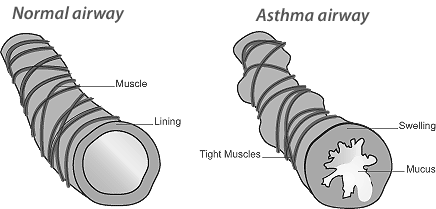
Asthma airway

Airway contracted under asthma attack

A great portion of asthma attacks are triggered by air borne stimuli. Triggering stimuli such as irritants, allergens or simply cold air enters the air way (bronchial) causing a strong reaction, inflammation and/or narrowing of the airway tubes that leads to breathing problems. Most asthma attacks are mild, but even people with mild asthma can have a fatal attack. More than 5,000 deaths a year in the USA are attributed to the condition.

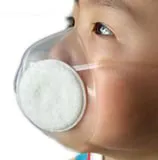
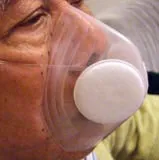
TOTOBOBO fits kid TOTOBOBO fits elderly
Perfect face seal is a pre-condition for cutting off air borne triggers

Symptom avoidance is a well know strategy for asthmatics. It is possible to cut off or reduce air borne triggers with a properly fitted filter mask (respirator). However choosing a suitable face mask can be a complicated issue.

There are two types of portable respirators in the market: reusable respirators and disposable respirators. High quality reusable respirator provides a better fit, but it is more bulky and less likely to be carry around, reducing the usefulness. Disposable respirators are more compact but can be easily distorted after use. This can affect the face-fit in subsequent use. Both types of respirators require a “fit-test” by professional to ensure a proper fit. However, it is not possible to conduct a “fit-test” each time when the mask is needed. Therefore the fit quality during use remains as a mystery.

Above dilemma is finally solved by TOTOBOBO mask, in a remarkably simple and intuitive way. First the transparent respirator allows you to see through the mask clearly and decide if the mask fits or not. Such visual check is easy to achieve each time when you need to put on the mask. Secondly, the mask can be trimmed to suit any unique face, including children’s. Finally the high quality reusable mask can be folded flat and fits into a shirt pocket, carry around and ready for the action whenever it is needed.

Currently TOTOBOBO mask is the only solution providing Easy fit-check, Customized fit and “Pocketability”. These are important factors if cutting off air borne triggers is in your plan against asthma attack.

Do consult your physician to come up with an overall plan for your own situation. You may consider TOTOBOBO mask as part of your overall strategy to reduce, but not to replace the use of medicine. A small percentage of patients’ asthma triggered by high moisture air might become worse after putting on a mask.

Below are some of the asthma triggers:

Air borne triggers

Irritants:
• Cigarette smoke
• Air pollution
• Cold air or changes in weather
• Strong odors from painting or cooking
• Scented products
Allergens:
• Animal dander (from the skin, hair, or feathers of animals)
• Dust mites (contained in house dust)
• Cockroaches dropping
• Pollen from trees and grass
• Mold (indoor and outdoor)
Cold air

Allergic triggers (non air borne)

• Cockroaches
• Mold (indoor and outdoor)
• Artificial sweetens
• Animals

Psychological triggers

• Stress
• Threaten
• Anger
• Shock

Physiological triggers

• Exercise
• Laughing
• Crying
• Sneezing

———————————————-

More information:

Detail list of asthma triggers
Asthma may not require daily medication
Studies review: Air filters were associated with significantly lower total symptom

———————————————-

Testimonial
———————————————-
Dr. Anil Simhadri, London, UK (2012)
I am a doctor /physician in the UK at UCL, and bike daily in london to work using totobobo mask. I also suffer from asthma using a ventolin inhaler. I have been using totobobo masks since feb 2010 when I placed my first order and find them very useful. My cycling performance with regard to speed of cycling has improved. Previously I might cycle 6 miles in 1 hour. Now I cycle 6 miles in 50 minutes. The mask helps improve my control of asthma. Asthma is a disease of airway hyper-responsivesness. The tracheal airways are hyper-responsive to various triggers. Pollutants in the air as in inner city london can trigger the airways to constrict or narrow. Totobobo masks prevent these pollutants reaching the airways and so help remove the “trigger” for asthma.

Teresa Lam, Hong Kong (2008)
“After trying the mask for a few weeks, I can say the TOTOBOBO mask does feel very comfortable. I’m quite positive that the mask had helped to reduce my asthma. The masks I used to use were not very air tight so most air I inhale would have gone through the side of the mask instead of any filtering.”
———————————————-

ASTHMA
CHILDREN
BUY
{ 8 comments }