“Rohan is glad that the dirt is collected on the filter, not in his lung.â€
Used filter (200km) vs new
Rohan Kini, an online bicycle shop owner in Bangalore, India, was testing a new pollution mask. After 200 km of bicycling in the city, he was very impressed with the performance of a new mask call TOTOBOBO from Singapore and decided to carry it in his shop.
The air pollution in London is nowhere near Bangalore standards. However, riding in heavy traffic can damage the respiratory system. The question is: How does one know if a pollution mask is needed or not?
The latest TOTOBOBO mask won’t be able to tell that in advance. But you can be pretty sure when it does the job – simply by checking out the color of the filters. The filter will turn into a distinguish dirty gray to signal that it’s time to change the filters.
The mask is ergonomically designed to fit the majority of faces, from adult down to children of age 5! The secret is in a world’s first “customizable†feature which allows you to trim the mask smaller if it is too big for you.
This reusable, flat folding little gadget may just be the right thing to keep in your pocket when you brave the urban traffic.
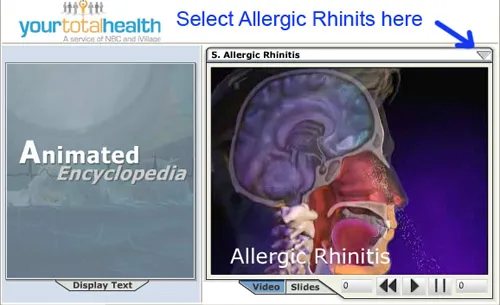
Understanding the process helps to develop an effective defense strategy.
The process of hay fever
Quote from the video:
“The best treatment is to avoid the allergen. When this is not possible, medication can usually control the symptoms of a reaction.”
Totobobo filter is very effective in filtering even the finest particles including the allergen. Carry one around during the hay fever season to avoid the attack. Defense from Allergic rhinitis (hay fever) has never been so easy.
Allen travel a lot and want to protect himself when he is in cities with heavy air pollution. He tried the TOTOBOBO mask and it appears to be the best mask he has tried so far. He ordered a bunch for his family because TOTOBOBO mask can fit the small faces of his children too.
As a traveler, pollution can exit in the most unexpected place. If it is not because of my previous research for a post (Say no to to pollution in school bus). I wouldn’t suspect there can be polluted air circulating inside a deluxe, aircond tourist coach.
Two weeks ago I took a SVIP coach from Singapore to Cameron Highlands. The seats inside this coach are large and the back can be lowered to almost flat- just nice for a good night sleep. The soft velvet feels comfy but I was curious to find out the air quality inside the bus.
I put on my mask during the overnight trip. We were required to get off the bus when crossing the border, and there were a couple of pee-stops during the night. I took off my mask when I need to get out of the bus and put it back on when I am getting back in.
After 6 hours of use
When we reach Cameron Highland it was 7am in the morning, I was shocked to discover the gray patch collected on the filters- a clear indication of air pollution inside the coach, most likely from it’s own engine! The air quality along the route up Cameron Highlands at that time should be very clean.
To make sure I was not making this up, I decided to compare the result on a plane trip. I put on the mask with a clean set of filters on a business trip to Frankfurt. When I reach there after 12 hours, I can not see any noticeable sign of dirt. To be very sure about this, I put the same mask on during my flight back. Now it accumulated a total 24 hours of use in the plane. Judging from the color of the filter it is still very clean.
My conclusion? The air inside that coach is MUCH worst than the air inside the plane. It seems the air filter on plane is much more effective than those on buses, if the buses have any air filter at all.
School Bus Air Quality: What Every Parent Needs to Know
Every day, the iconic yellow school bus transports millions of American children, a symbol of safety and community. But beneath the familiar exterior, an invisible challenge may be lurking: the air quality inside.
The Hidden Issue: Diesel Exhaust in the Cabin
While school buses are engineered for safety, many older models, primarily powered by diesel engines, can inadvertently trap pollutants within the very space children occupy. Studies have consistently shown that harmful diesel exhaust, rich in particulate matter, can accumulate inside the bus cabin, often at levels significantly higher than the outside air.
Where does this pollution come from?
Tailpipe Emissions: The most obvious source, releasing exhaust into the environment.
Engine (Crankcase) Emissions: Often overlooked, these emissions escape directly from the engine. They frequently find their way into the bus cabin through the floorboards and, notably, every time the bus door opens – drawing engine fumes directly into the passenger area.
Why Diesel Exhaust is a Concern for Developing Lungs
Diesel engines release nearly 40 toxic substances, smog-forming emissions, and fine particulate matter (PM10 and PM2.5), often referred to as “soot.” These microscopic particles are particularly insidious. Once inhaled, they can lodge deep within the lungs, contributing to serious health issues.
Children face a heightened risk because:
Developing Lungs: Their respiratory systems are still maturing, making them more vulnerable to damage.
Higher Respiration Rate: Children breathe more air per pound of body weight than adults, meaning they can inhale a proportionally larger dose of pollutants.
The long-term consequences of exposure to diesel exhaust in childhood can include reduced lung function in adulthood, aggravated asthma, lung inflammation, and even potential links to heart problems and certain cancers.
Health Risks of Particle Pollution:
Aggravated asthma
Lung inflammation
Heart problems
Potential cancer risks
Increased risk of premature death
An “Extra Dose” Twice a Day?
For children riding on buses manufactured before 2007, the exposure can be substantial. Monitoring has shown that diesel pollution levels inside these older buses can be up to five times higher than the air outside.
Unless your child’s bus is a newer 2007 model or has been retrofitted with specialized filtering technology, they are likely inhaling elevated levels of these unhealthy pollutants on their daily commute.
Empowering Solutions: A Breath of Fresh Air is Possible
The good news is that preventing exposure to diesel school bus pollution is achievable. Science clearly demonstrates that even short-term exposure to elevated particulate levels can have immediate health effects, highlighting the urgency of implementing solutions.
Long-Term Strategies for Cleaner Buses (Four Steps to Cleaner Buses):
Fleet Modernization: Replacing older buses with new 2007 engine model year buses (or newer) can slash harmful soot pollution by up to 90%.
Retrofitting with DPFs: Installing a Diesel Particulate Filter (DPF) on the tailpipe of existing buses can significantly reduce particulate emissions.
Crankcase Ventilation Systems (CCVS): To tackle engine emissions entering the cabin, a CCVS reroutes these fumes directly back into the engine’s air intake, preventing them from escaping into the air and, crucially, into the bus itself.
Immediate Action: Personal Protection for Your Child
While schools work towards these long-term upgrades, parents can take immediate steps to protect their children during bus rides.
It’s important to note that a standard surgical mask offers little protection against airborne particulates, as contaminants can easily bypass the loose fit. Similarly, certified N95 respirators are not generally available for children because NIOSH (the National Institute for Occupational Safety and Health) does not certify them for pediatric use.
This is where innovative solutions come into play. The Totobobo mask stands out as a unique option designed specifically with children’s needs in mind. While not NIOSH-certified for pediatric use (due to the lack of a specific certification category for children), its design prioritizes a custom, secure fit on small faces. Parents can visually confirm a seal, offering a level of protection unmatched by generic alternatives.
The Totobobo mask also offers a choice of two filter types:
96% Protection: Exceeds the filtration level of an N95 mask.
94% Protection: Only marginally less than an N95, with significantly lower breathing resistance for enhanced comfort.
By combining systemic upgrades with thoughtful personal protection, we can ensure that every school bus journey is not just safe, but also healthy for our children.
Living in New Delhi means facing extreme air pollution every day. For the last decade, Mohit has relied on the Totobobo mask to stay healthy while walking and cycling through the city. In this review, he shares how it’s been essential for:
✅ Protecting against PM2.5 and dangerous pollution
✅ Managing his sinus issues and preventing allergies
✅ And… an unexpected bonus use for cat owners! (You won’t believe this one 😂)
Have you used a pollution mask? Share your experiences in the comments below!
After some time of use, any face mask will get dirty. TOTOBOBO mask is praised by many users as light-weight, easy to clean.
Here is a simple step-by-step instruction about how you can do the cleaning under a tap. Make sure you clean your hands before you start cleaning the mask.
1. release the filter cap and remove the filters.
2. apply soap – Apply soap thoroughly inside and outside of the mask.
3. rinse – Rinse the mask, inside and out thoroughly.
5. drying the mask with a clean tissue paper
If you are in a hurry, dry the mask with a clean tissue paper.
6. leave it in clean and dry air for a while
If you have time, simply leave the mask to dry in a clean environment.
7. insert new filters
Now hinge on the filter cap, insert a new filter pair, and you are ready to go again.
The TOTOBOBO mask is the world’s first customizable respirator. Other products are only available in a particular size that only fits a particular age range and facial structure. For everyone else, there is little else that can be done.
TOTOBOBO, on the other hand, is capable of being trimmed to fit a wide range of facial sizes for optimal comfort and filtering. The mask fits most adults and can be modified to fit children as young as 5 years old. TOTOBOBO is the most versatile protective mask on the market. Adjusting the mask’s size is simple, just follow these steps:
Note: Use a pair of clean and sharp scissors. Wash your hands before starting.
You first need to determine how small you want to trim the mask. You can make a quick estimate by covering the mask on the user’s face, or better yet, get a TOTOBOBO dummy mask set. If you are not sure about the accurate size, I suggest you to trim the mask one ring at a time. The mask should form a snug fit to the face, but not so tight as to be uncomfortable. Take this into account when trimming the mask. Remember: measure twice, cut once.
You then carefully cut the material of the mask starting from the bottom. Inserting the scissors, follow the curvature of the mask along one of the ridges as you cut and make a complete loop. Trim any excess for comfort and test size as necessary. The excess material can be disposed of, and the mask is ready for use.
Once the mask is cut to fit the desired size, it is ready for repeated, long term protection.
1 - start the cut from the bottom of the mask
2 - insert the scissors into one side of the opening
3 - following the contour and around to the other side
Document title
Predictive value of the user seal check in determining half-face respirator fit
Author(s)
DERRICK J. L. (1) ; CHAN Y. F. (1) ; GOMERSALL C. D. (1) ; LUI S. F. (2) ;
Author(s) Affiliation(s)
(1) Department of Anaesthesia and Intensive Care, The Chinese University of Hong Kong, Prince of Wales Hospital, Shatin, HONG-KONG
(2) Department of Medicine and Therapeutics, The Chinese University of Hong Kong, Prince of Wales Hospital, Shatin, HONG-KONG
Résumé / Abstract
Guidelines issued by the Centers for Disease Control and Prevention and the World Health Organization state that healthcare workers should wear N95 masks or higher-level protection during all contact with suspected cases of severe acute respiratory syndrome. Before use, the manufacturer recommends performing a user seal check to ensure that the mask is fitted correctly. This study aimed to test the ability of the user seal check to detect poorly fitting masks. This study is a retrospective review of a mask-fitting programme carried out in the intensive care unit of the Prince of Wales Hospital in Hong Kong. In this programme, all staff were tested with two types of N95 mask and one type of N100 mask. The results of the documented user seal check were then compared with the formal fit-test results from a PortaCount. Using a PortaCount reading of 100 as the criterion for a correctly fitted mask, the user seal check wrongly indicated that the mask fitted on 18-31% of occasions, and wrongly indicated that it did not fit on 21-40% of occasions. These data indicate that the user seal check should not be used as a surrogate fit test. Its usefulness as a pre-use test must also be questioned.
Revue / Journal Title
The Journal of hospital infection ISSN 0195-6701
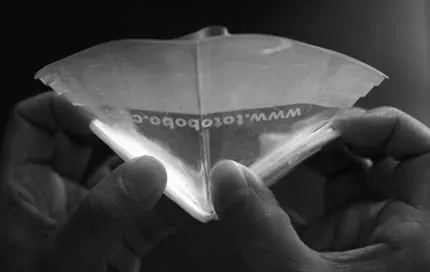
If you purchase a TOTOBOBO mask between September 1st~17th from this site, please check if you have received a defective mask. The problem is the whole filter tend to fall off very easily. It is easy to check: refer to the photo here: try to open up the mask by graping both filters, the mask should be opened without the filter dropping off. If the filter detached from the mask without much force, then the mask is defective. Please contact totobobomask (at) gmail . com to arrange for replacement mask.
We’ve taken immediate steps to correct this problem. Masks purchased after September 17 are free from such defect.
We apologize for the inconvenience caused.
Checking if TOTOBOBO mask is defective (view from bottom of the mask)







Recent Comments