Why the Seal Matters
- The mask’s effectiveness relies on two things: how well the filters clean the air, and how well the mask seals to your face so air flows only through the filters.
- While filter quality is certified by lab reports, confirming a proper face seal is up to the user.
- The Totobobo Mask is unique in offering a simple visual seal check using the “Water Mark” feature.
Step-by-Step Seal Check
- Apply a thin layer of water to your face with a cotton wool pad, focusing on the nose bridge and chin areas.
- Put on your Totobobo Mask as you normally would.
- Look closely at the frosted edge of the mask, which will turn transparent (form a “water mark”) wherever it contacts damp skin.
- Check that the transparent water mark forms a complete, unbroken loop around your face—over the nose, past the mouth, and under the chin.
- If you see a continuous loop, your mask has a good seal and is ready for use.
- If any frosted (opaque) sections break the loop, there may be gaps—adjustments are needed for a better seal.
Tips to Improve the Seal
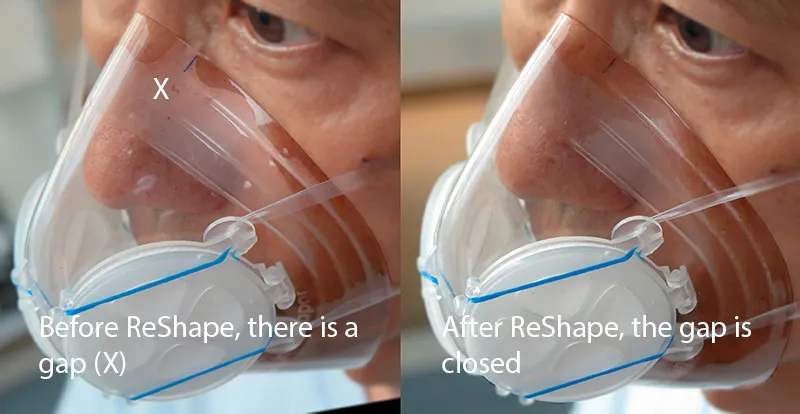 Water mark shows poor and good seal before and after ReShape of Totobobo mask.
- Shift the mask up or down to adjust its position on your face.
- Adjust the elastic straps so they are snug but not overly tight (too tight can break the seal).
- If needed, reshape the mask with hot (~70C) water to better match your facial contours.
(Note: Thoroughly Mix 1 cup of boiling water with 3 cups of room temperature to get the required ~70C. Boiling water alone can damge the mask) - Downsize (trim) the mask if it’s too large for your face.
Final Reminder
Only a properly sealed mask provides the best protection. Always use the water mark method to confirm your seal before using your Totobobo Mask.
Q1: What is the Water Mark seal check method for the Totobobo Mask?
A: The Water Mark method visually verifies the mask’s seal by showing where the frosted mask edge turns transparent on contact with wet skin, forming a continuous loop around your face if sealed properly, ensuring optimal protection.
Q2: Why is a proper face seal important for respiratory masks?
A: A proper seal ensures that all inhaled air passes through the mask’s filters, blocking pollutants and allergens effectively. Gaps reduce mask efficiency and increase exposure risk.
Q3: How do I perform the Water Mark seal check on my Totobobo Mask?
A: First, apply a thin layer of water around your nose bridge and chin. Put on the mask, then check for a continuous transparent water mark around the mask edges—if intact, the seal is good. If not, adjust the mask position or straps.
Q4: What adjustments can improve a poor seal?
A: Shift the mask up or down for better fit, adjust strap tension to be firm but comfortable, reshape the mask using warm (70-80°C) water, or trim the mask edges if necessary.
Q5: How often should I use the Water Mark method?
A: Use the Water Mark seal check each time before wearing the mask to ensure continued protection and maximum filtration efficiency.
Q6: Can reshaping the mask damage it?
A: When reshaping, use water within the recommended 70-80°C range to avoid damage. Reshaping can be done multiple times to optimize fit without compromising mask integrity.