Singapore, 2009-06-15
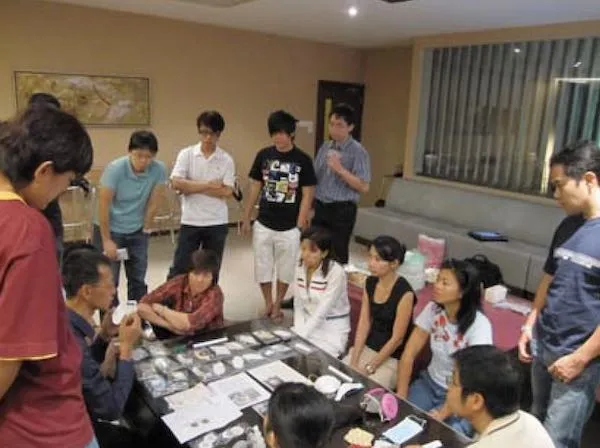
Francis was invited by the Curriculum Planning and Development Division of the MOE to give a talk to a group of D&T teachers about the design process of the Totobobo mask. He demonstrated how to put on and take off the Totobobo mask during the presentation.
“I was motivated to find a solution to protect my children after the SARS incidents,” Francis explained. “None of the N95 mask fit children because they were all designed and certified for adults in an occupational context.” To ensure protection, the mask must fit the user’s face snugly and form a good seal. Most people do not realise that and think they are safe by wearing an N95 mask. In fact, they need to validate the seal by undergoing a fit-test conducted by a qualified facilitator and using specialised equipment to check the seal.
A study at Prince of Wales Hospital suggested that 1 in 4 healthcare workers thought they had a good seal, but in fact, it was not.
Another study, “Respiratory Donning in Post-Hurricane New Orleans” (published on the US CDC website in May 2007), further highlights the challenge of achieving a good seal. The researchers found that 76% of participants were unable to demonstrate proper donning for a good seal, and their protection was compromised.
After experimenting with hundreds of handmade prototypes, the solution that Francis came up with was remarkably simple- construct the mask with transparent material, and you can immediately see where it touches the skin, or not. To validate this principle, he compared the results of a fit-tested Totobobo mask with the visual-check prediction. The result achieved more than 90% accuracy, offering significantly higher predictability than any other mask available on the market. In a practical sense, the Totobobo mask comes with its built-in fit-tester.
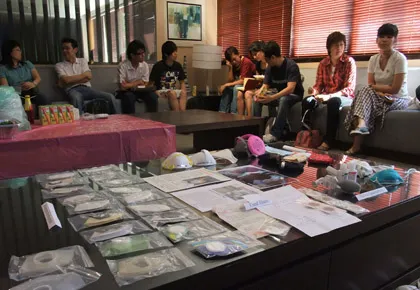
To cater for the face size of small children, Francis developed a unique method to attach the strap to the mask. Unlike all competitive products, the strap of the Totobobo mask is not attached to the edge of the mask, but positioned away from it. This new method allows the mask to be trimmed to easily fit all children aged 5 years and older. Such an approach would appear unthinkable because in a normal mask design, you would cut off the strap as well. However, upon reviewing the handmade prototypes, the solution appears logical: Francis has been cutting a large number of masks to fit his children.
The D&T teachers and the guests were impressed by the innovation. “Can I buy the Totobobo mask for my students in the Art & craft class?” asked one of the teachers. “Sure, and you will get a special education discount too,” Francis answered with a smile.
The session concluded with enthusiastic discussions among the teachers, many of whom saw potential in using the Totobobo mask as a real-world case study for their students. Its innovative design—combining functionality, adaptability, and user safety—serves as a compelling example of how engineering and creativity can address everyday challenges.
As schools continue to emphasise hands-on, problem-based learning, inventions like the Totobobo mask may soon find their way into classrooms, inspiring the next generation of designers and engineers. For now, Francis’s journey stands as a testament to the power of persistence, ingenuity, and the drive to protect what matters most.
— End —
Great video and very helpful!
Thanks, Paula!